Large Language Models and classism. The ethics of reading (3)

When reading texts with lots of general remarks and little attention to detail, I often wonder whether it’s produced by ChatGPT or some other LLM. I don’t like this kind of suspicion, especially in the context of teaching and evaluating. Not least because it primarily targets the author rather than the text: Has the author used an LLM and hence tried to cheat? So rather than assessing the text, I am incentivised to make a moral judgment. This readjusts my attitude as a reader in a crucial way. Rather than trying to enjoy the flow of the text or get into the argument, I wonder about the honesty and sincerity of the writer. While there is currently much discussion about cheating with LLMs, the unease that the suspicion causes me brings quite another worry to the fore: my own classism. Am I really worried to be cheated on or that the poor souls relying on AI are not learning to think for themselves? Or am I not rather mainly worried that these bullshitting texts produced by AI are soon indistinguishable from the products of my authentic intellectual labour? Let me explain.

Tacitly cultivating classism. – Being what is called a first-gen academic, one might say I’ve earned my cultural capital the hard way. I still remember how I mind-numbingly practiced philosophical terminology at the age of thirteen, enjoing the cluelessness of my parents when I put it to use. Looking back, I think of myself as impertinent and cruel. Intellectualism doesn’t come across as thuggish as brute anti-intellectualism. But I would say that, wouldn’t I? More to the point, my intellectualism paved a way that seems now to be threatened by the fact that text production can be outsourced just like other kinds of labour. Intellectual work of certain kinds is indistinguishable from work outsourced to LLMs. Being annoyed by people’s use of LLM’s I don’t feel consciously threatened. But I do wonder whether it’s this class aspect that creeps into my judgement of those users.

What kind of work do we actually grade as instructors? – My hunch is, then, that what is behind my suspicion against certain writers who might have used LLMs is owing to a certain classism or class anxiety. If people can outsource intellectual work at least to a certain degree, I might end up suspecting (tacitly) that these people don’t belong where they claim to be. Now you might respond that part of this suspicion is fair in that it targets fraud etc. Yet, I’m not sure it is fair. Of course, when dealing with straightforward cheating, our responses might be justified. But most cases are not that straightforward, or so I suppose at least. Just consider the teaching context: We might say we’re distinguishing students who “have done the work” from those who didn’t. But making such a distinction seems to rely on the fact that some students actually “do the work” in relation to one’s class. Yet, what if we’re merely rewarding those students who have learned intellectual skills to produce great texts long before they set foot in our classes? In other words, we might not reward intellectual skills developed as taught by us but intellectual skills as picked up long before. So what are you grading in such cases? The things that people learned in your class or the things that people bring along? If you’re perhaps not actually assessing people’s progress in your course, then the question arises what’s so salient about the distinction between someone well-educated long before and someone making up for an earlier disadvantage by using tools like LLMs to improve their work.

AI use between shaming and rewarding. – My point is not to appeal to such classism to silence justified criticism of naïve integration of AI into teaching contexts (here is a pertinent open letter I co-signed). But classism is a real thing; and “AI shaming” seems to be a new way of exercising the related kind of gatekeeping. Now that people start noticing that AI shaming is on the rise, it doesn’t mean it’s just part of an arsenal of arguments in favour of Tech Bros (as this thread insinuates). The stigma of using AI for one’s work is as real as the problem of cheating and related vices. ­But that doesn’t mean AI usage is exhausted by this. The world we live in will increasingly reward using AI. As an instructor I’m primarily faced with downsides when students use it to cheat, but as soon as we’re not acting as professionals ourselves we might become quite dependent on the benefits of AI. Just step outside your comfort zone and hand over the task of reformulating a text with a pertinent perspective! Having drafted a couple of legal documents, for instance, I have found that ChatGPT is a helpful tool. Of course, I still need to check on points, but the Legalese produced by this device is of real help. But relying on such help will be shamed by the next best expert in legal matters. And then it’s me who is at the receiving end of AI shaming.

From texts to their producers. – If we take the class perspective seriously, AI is not only presenting us with challenges but with contrary assessments ranging from worries about fraud, on the one hand, to worries about inappropriate gatekeeping, on the other. So how can we respond to this situation? My hunch is that we first need to acknowledge that this technology changes our reading culture. For a very long time, at least since the critical philological work of the 19th century, we have learned to see texts as something objective in that they can be seen independently from their producers or authors (or the layers of production of texts). As Daniel Martin Feige noted, digitalization involves a striking return of the author (see part three of his Kritik der Digitalisierung). With the constant possibility of text production through LLMs, we will focus even more on the author and marks of authenticity again, whether we like it or not. But this doesn’t mean that we need to resign ourseves to constant suspicion.

Authentic versus bullshitting texts. – Turning to texts themselves, the crucial question for us will be whether such texts are authentic and genuine expressions by an author or bullshitting texts. In educational contexts, we have known long before the advent of LLMs that our grading systems incentivise bullshitting, with or without LLMs. So I’d repeat that we educators need to focus on actually reading rather than going for quick judgments. This would not merely mean assessing whether someone is cheating but to reflect on what we expect and on whether our expectations are mainly pertaining to class markers, as seems to be the case in many instances. The bottom line seems to be this: Our worry should not be about the use of AI or AI-prompted texts, but about bullshitting texts. This might still mean that our current reading culture (where we treat texts as something objective) might come to an end. But so be it.
CfA: Collegium Spinozanum V. An international summer school on Spinoza and Spinozisms

Call for Participants / Call for Abstracts:

Collegium Spinozanum V

An International Summer School on Spinoza and Spinozisms in Their Historical and Philosophical Contexts

FernUniversität in Hagen, 30 June – 3 July 2026

The Collegium Spinozanum V aims to bring together advanced students and established scholars working broadly on Spinoza’s thought, its sources, and its reception. Creating an international forum to stimulate scholarly exchange and conversations inspired by diverse approaches, the Collegium Spinozanum has been held four times with increasing participation and has now become a well-established tradition.

Over four consecutive days, morning sessions will be devoted to distinct areas of Spinoza scholarship, guided by our keynote speakers. Afternoon sessions will feature roundtable discussions and selected papers presented by participants.

Keynote Speakers

Alexander Douglas (University of St. Andrews)

Julia Peters (University of Heidelberg)

Kristin Primus (University of California, Berkeley)

Martin Saar (Goethe-Universität Frankfurt)

Academic Coordinators

Martin Lenz (FernUniversität in Hagen)

Andrea Sangiacomo (University of Groningen / Erasmus University Rotterdam)


Practical Information

Level: From advanced BA students to senior academics

Fee (includes course materials, administration, four lunches, coffee breaks, and one dinner):

  • €350 – PhD students, postdocs, and senior staff
  • €250 – Undergraduate students

In cases of financial hardship, a reduced fee may be available. Please indicate this in your application if applicable.


Requirements

Participants should have a basic prior knowledge of Spinoza’s philosophy and a general familiarity with philosophy and the history of philosophy. A sufficient command of English is required for active participation and presentation.


Learning Outcomes

After this course, participants will be able to:

  1. Grasp key and challenging aspects of Spinoza’s philosophy and its historical dimensions.
  2. Navigate contemporary scholarly debates related to Spinoza and Spinozism.
  3. Develop analytical skills in reading, understanding, and explaining historical texts.
  4. Enhance social and academic skills for engaging with a diverse scholarly audience.

Workload

  • Preparatory work: 24 hours
  • Contact hours: 30 hours
    Total: 54 hours (equivalent to approximately 2 ECTS)

Participants will receive a Certificate of Attendance stating the total workload. Students may apply for credit recognition at their home institutions; the final decision rests with those institutions. The organizers will provide additional documentation if required.


Application Procedure

To apply, kindly send a mail to Alina Barendt: alina.barendt@fernuni-hagen.de  

Please state ‘CS V’ in the header of your mail and provide your name, academic status and affiliation / place of study.

Please add the following documents in PDF format:

  • CV (max 2 pages)
  • Motivation statement (max 300 words) stating the reasons for attending the Collegium
  • For those who wish to present a paper: send an abstract of max. 500 words.

Application deadline: January 31, 2026

Participants who apply to present a paper will be notified of acceptance of their papers by February 15, 2026. Time slots for presentations are limited. But if your paper is declined, you can still participate in the summer school.

Please note that in the case that the number of applications will exceed 40, a selection may take place. The selection will give priority to participants who have been accepted and further to those who best meet the requirement (prior knowledge of Spinoza and background in philosophy and history of philosophy), and who completed their registration earlier.


Accommodation

The fee does not cover accommodation costs. Below is a list of nearby options:

Low budget​:

Jugendherberge Hagen

Bildungsherberge Hagen 

Medium ​budget:

Campushotel Hagen 

B&B-Hotel Hagen

Mercure Hotel Hagen 

Amical Hotel Hagen 

Hotel Lex Hagen 

High budget:

Arcadeon Hagen 

Saxx Hagen 

“The aims are discussed far too rarely” – An interview about the latest conference of the European Society for Early Modern Philosophy

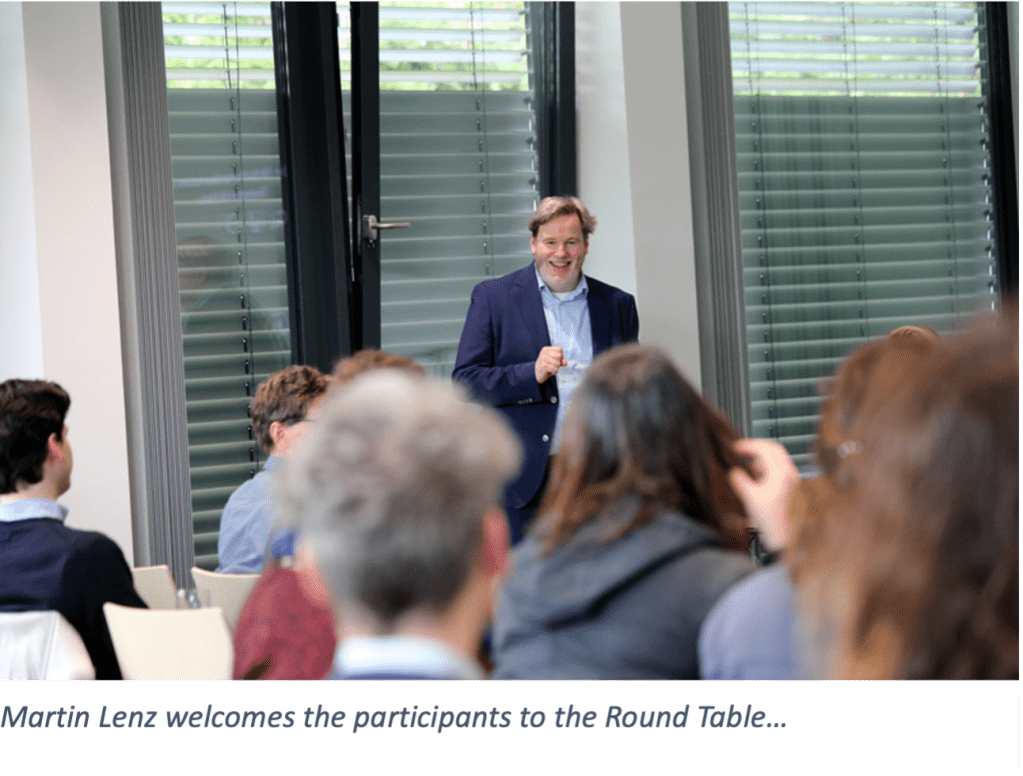
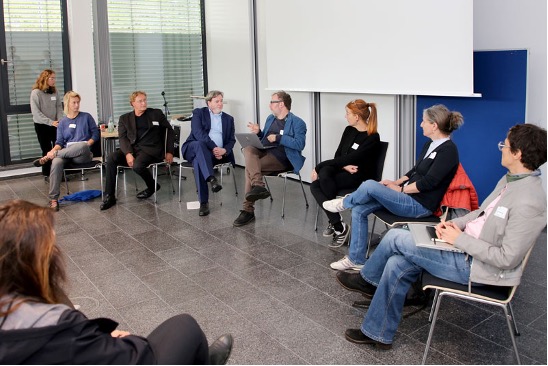
A major conference on early modern philosophy brought together guests from all over the world on the Hagen campus. Organizer Prof. Martin Lenz explains what it was all about.

The society has come full circle: In 2004, the European Society for Early Modern Philosophy (ESEMP) was founded with a conference at the FernUniversität in Hagen – on the initiative of Hubertus Busche, who headed the Philosophy I department at the time. Now, around 20 years later, the professional society is inviting participants back to Hagen: to the 7th International ESEMP Congress: “Why and How Do We Study Early Modern Philosophy Today?”

Martin Lenz has headed ESEMP for the past three years, and since 2024, he has also lead the Philosophy I department. He was the lead organizer of the international meeting in Hagen. The German Research Foundation (DFG) supported the conference with its diverse program – from the Early Career Session to the round table. Keynote speakers were Mogens Lærke (Oxford) and Anik Waldow (Sydney).

Clearly identify aims

“We talk far too rarely about the aims, why we pursue our studies in the first place,” Lenz says, highlighting a basic assumption of the conference. What does this mean? “In philosophy, we have what’s known as canon expansion, for example. This means we’re trying to expand the canon with people who have hardly been read before.” These usually include members of underrepresented groups – such as female philosophers. But why expand the canon at all? Why not stick with the older works? “In this case, the answer seems to be a political one,” explains Lenz. “There is the goal of equality, which is followed by a research agenda.” As a researcher, he identifies with this concern. Nevertheless, it is important to reflect explicitly on such objectives, the “why?” – if only to choose the right method for one’s own work.

Utilizing a variety of methods

“And our methods in philosophy have become very diverse these days,” Lenz says, addressing the second major conference question: “How?” Sitting in a quiet room with dusty books? Academic work increasingly rarely corresponds to this image. “Digitalization has brought us many possibilities.” As an example, Lenz cites the so-called Digital Humanities – a still fairly young movement within philosophy that utilizes digital tools. “It’s often about making texts accessible, producing editions, or recognizing frequencies,” says Lenz. “For example, I could instruct an artificial intelligence system to search for all dissertations on a certain topic in a specific region.” Such a computer analysis can, among other things, help to counteract prejudices and subjective misconceptions: “You can then see, for example, that ‘Philosopher X’ wasn’t actually as dominant in their era as assumed.”

“How did we get here?”

For Lenz, the questions of “how?” and “why?” lead to fundamental considerations about the relevance of his discipline. “If we want to understand ourselves, we find ourselves in different histories – depending on our individual backgrounds. For example, can one understand the FernUni as a project if one is unfamiliar with the educational policy situation in North Rhine-Westphalia in the 1970s?” For him, history is not a linear process that inevitably ends in progress; it is asynchronous and dependent on subjective preconditions. “How did we get here? And why haven’t we all arrived at the same point?” Properly applied, philosophy helps answer such questions and organize narrative threads in the history of ideas.

Suggesting alternatives

Although philosophy often remains self-referential, it can provide new food for thought: “Philosophy does not thrive on progress, but on repeatedly returning to themes. It could be viewed as a great conversation spanning all time – within this, however, one often discovers alternatives to the prevailing thinking.” Lenz also locates the lively debates of the international conference in this interplay of old and new, established and alternative.

A vibrant campus

Breaking down established structures wasn’t just about the content: “With the conference, we also offered mentoring for researchers in early career phases.” They were assigned mentors in keeping with specific keywords, thus creating professional tandems. “Established people then attended lectures given by younger people and were able to provide feedback – and, conversely, gather new ideas themselves.” The plan worked, with all generations mingling at the conference. “My impression was that it was very well received.” The coordination both beforehand and on-site paid off. A large team was needed to effectively support the many people on campus and during the supporting program in Hagen. “There was a lot to do!” emphasizes Martin Lenz. “I would like to express my sincere thanks to everyone who helped.”

**

Interview and photos by Bendedikt Reuse

Translated from the German by Martin Lenz

Неисправимость ChatGPT и конец преподавания*

Автор: Мартин Ленц, Хагенский университет (The incorrigibility of ChatGPT and the end of teaching)

Перевод: Мария Весте, Университет Линчепинга, Швеция

Предположим, вы стали свидетелем аварии и должны сообщить об этом в полицию. «Ну, красная машина ехала на большой скорости в мою сторону, а потом резко повернула налево», — восклицаете вы. Вы изо всех сил пытаетесь подобрать правильные слова, чтобы точно описать те события и людей, которые вы заметили и их точную последовательность. Будучи по натуре немного педантичной, вы продолжаете исправлять себя. «Сначала казалось, что водитель хотел меня сбить», — такая формулировка в конце концов вас устраивает. — Теперь представьте, что вы пытаетесь уточнить свои впечатления с помощью ИИ. Очевидно, что всегда есть возможность улучшить стиль и грамматику. Но можно ли ожидать, что ИИ (любая Большая Языковая Модель (LLM) улучшит точность ваших фактических утверждений? Нет. Но что это значит, если ИИ все равно используют для улучшения фактических утвердений?

Учитывая то, как работает ИИ, он не имеет опыта в каком-либо смысле. Скорее, он генерирует предложения, предсказывая наиболее вероятную последовательность слов на основе полученных данных из огромного количества текста, на котором он был обучен. Таким образом, он не может улучшить содержание утверждений, основанных на опыте, то есть невозможно исправить содержание текста. Хотя это само по себе не удивляет, последствия, которые эта невозможность имеет в контексте обучения, заслуживает пристального внимания. Обучение частично осуществляется в процессе исправления утверждений. Сейчас, когда люди используют ИИ как устройство не только для сокрытия своих плагиатов, но и для «решения» всевозможных вопросов, этот аспект становится ключевым.

Я неоднократно задавался вопросом, что именно идет не так в контексте обучения с использованием ИИ, и теперь я начинаю думать, что все сводится к потере исправляемости, и к потере понимания того, что вообще означает исправляемость. Короче говоря, видя, что это ИИ как устройство улучшает форму (письменных) текстов в удивительных масштабах, мы не замечаем, что оно обедняет наши отношения с эмпирическим содержанием. Далее я хотел бы исследовать эту потерю в контексте преподавания философии.

Что такое исправимость? Исправимость означает, что утверждение или текст можно исправить. Если я говорю, что идет дождь, вы можете исправить меня, указав, что на самом деле дождя нет. Мы постоянно предлагаем и получаем исправления. Мы улучшаем формулировку того, что мы видели, находя более подходящие фразы. Мы можем различать грамматические и стилистические исправления как исправления формы в отличие от содержания, но часто эти два вида исправлений трудно разделить. Фраза «идет дождь» формально правильна, когда ее используют носители языка, но то, что делает ее правильной для пользователей языка, — это то, как она применяется к общему опыту мира (в котором случается дождь). Если я попрошу вас уточнить свою формулировку, предложив, например, что на самом деле идет проливной дождь, а не просто дождь, я могу иметь в виду одновременно внимание к вашему опыту и общепринятый способ выражения такого опыта в языке. Когда вы думаете о своем опыте и способах его лингвистического выражения, вы, вероятно, будете использовать как лингвистические источники (языковые конвенции, литературу, социолект, который, как предполагается, ожидает ваша аудитория, и т. д.), так и нелингвистические источники (все, что вы можете почерпнуть из других модальностей восприятия). Самое главное, вы будете использовать связи между применением лингвистических ресурсов и нелингвистическим опытом. Другими словами, мы связываем лингвистические конвенции с (нелингвистическими) фактами.

ИИ, напротив, этого не делает. Не имея отношения к миру, он ограничен лингвистическими ресурсами; у него нет других модальностей восприятия, и он не может соотносить лингвистические и нелингвистические факты. Другими словами, хотя он может улучшать формулировки, его нельзя исправлять. Говоря языком Витгенштейна, все, что кажется правильным ИИ, является правильным — а это означает, что нет смысла различать правильное и неправильное. (Есть интересная статья о том, как это узнать на собственном опыте.) Таким образом, мы даже не должны говорить, что у ИИ галюцинации, когда ИИ «выдумывает». Для этого устройства нет значимого различия между галлюцинациями и правильным пониманием вещей.

Сомневаюсь, что я сообщаю здесь какие-либо новости. Так зачем же об этом говорить? Потому что и язык ИИ, и язык создателей этой технологии постоянно напоминают о том, что это устройство обучается, исправляется и совершенствуется. Да, оно совершенствуется в том, что уже делает, но не в каком-либо другом смысле. Это напоминание обманывает многих из нас, заставляя думать, что это улучшение того рода, с которым мы знакомы, то есть ИИ учиться и осваивает новое, прежде неведомое. Это присуждение ИИ нам знакомых  качеств обьясняет то, что ИИ теперь всё чаще воспринимается как содержательный, привлекательный или заботливый собеседник. ИИ (или мы сами себя) обманывает многих из нас, заставляя предполагать, что он может «учиться», будучи «исправленным». Но обучение для человека всегда подразумевает отношение (и как соотношение) к миру. Таким образом, главная путаница с ИИ заключается в том, что совершенствование ИИ в любом случае такое же, как мы пытаемся совершенствовать свой собственный способ самовыражения.

Как это влияет на преподавание (философии)? Есть много статей о закате гуманитарных наук в связи с появлением разнообразных ИИ устройств. Учитывая, как эта технология распыляет (не уничтожая полностью, но отрицая возможность закрепления четких координат) наше чувство авторства и нашу культуру чтения, я склонен думать, что весь наш подход к созданию текстов и чтению выйдет из моды и станет уделом зануд. Так же, как длинные соло на электрогитаре или клавишных, которые, казалось бы, были повсеместны в 70-х и 80-х годах, теперь являются уделом нескольких ботаников на YouTube. Так что, на мой взгляд, проблема не в том, что студенты подделывают тексты; проблема в том, что большинство текстов считаются неактуальными. Наряду с навыками и особенностями, которые необходимы для их создания. Умение писать хорошие тексты уже неактуально в мире, где так называемые лидеры обходятся без даже беглого просмотра своих брифингов. Но давайте вернемся к нашей теме. Мое предположение заключается в том, что утрата исправимости, присущая ИИ, является результатом более широкой тенденции, которая была четко признана в книге Гарри Франкфурта** «О бреде собачьем» (вы и без ИИ знаете как перевести выражение об экскрементах крупного рогатого млекопитащего мужского пола в английском язке означающем пренебрежение к сообщению на русский язык, где пренебрежение выражается отсылкой к мужскому половому органу человека) еще в 1986 году: как только вы понимаете, что можете убедить, не прибегая к методам оценки правдивости, вы можете вообще игнорировать правду. В конце концов, вопрос не в том, каким образом ИИ неисправим. Мы можем быстро это выяснить. Вопрос в том, почему мы позволяем исправлять себя устройству, которое не поддается исправлению.

Но это вопрос для умников. Таким образом, освоение длинных письменных текстов, не говоря уже об их написании, не кажется чем-то особенным, более того в настоящее время это не кажется многообещающим занятием. И не только потому, что у студентов есть стимулы подделывать свои работы, но и потому, что в принципе практически нет стимулов для создания таких работ. Зачем учиться играть на фортепиано, если есть клавишные инструменты с автоматическим аккомпанементом? Конечно, их звучание может быстро надоесть. Но кому какое дело, если это все, что есть в наличии? Итак, еще раз: проблема не в мошенничестве, а в неактуальности. Пишу это, я чувствую себя как динозавр, оплакивающий утрату своей естественной среды обитания. И, вероятно, это именно так: старик, жалующийся, что никто не ценит красоту, скрытую в искусстве, которое он так любит. И что с того? Действительно, что с того?

Что же остается учителям? Если вы не слишком беспокоитесь о плагиате, вы можете направить свою энергию на то, чтобы заставить людей думать, не анализируя тексты, а придумывая хорошие подсказки для ИИ или совершенствуя свои навыки видеомонтажа. Другими словами, хотя некоторые продукты (такие как хорошо написанные эссе) в будущем будут просто создаваться ИИ, вы можете помочь студентам улучшить «их» работу, сосредоточившись на том, чтобы помочь им использовать инструментарий этог и будущих устройств искусственного интеллекта. Однако остается вопрос: для чего нужен этот инструмент, если мы признаем, что написание текстов не имеет значения?

_________

* в моем переводе используется обозначение ИИ (искусственный интеллект) для обозначения разных программ (в статье – они обозначены как устройства), в оригинале Мартин Ленц упоминает программу ЧатГПТ, которая специализируется на обработке текстов

** В личном разговоре Мартин Ленц исправил мое (неинфомированное) представление о концепции БУЛШИТ, который нельзя потому, что это устойчивый философский термин. Я все же сохраню свою интерпретацию этого обозначения, которое вариативно в рамках разных языковых картин мира.

CfP: Reading as a Social Practice. An Interdisciplinary Workshop

CfP: Reading as a Social Practice. An Interdisciplinary Workshop

Berlin, 27-28 March 2026

Organised by Irmtraud Hnilica (Mannheim/Hagen) and Martin Lenz (Hagen)

According to a widespread consensus, we are currently living through a reading crisis. This workshop seeks to take a step back from the rhetoric of decline and instead raise the question of how reading itself can be conceptualised and approached from different disciplinary perspectives, particularly in philosophy and literary studies. To a first approximation, we propose that reading is determined not only by texts themselves or by individual readers, but mainly by the interactions between readers. We especially invite submissions engaging with this claim—whether through historical investigations of reading cultures, theoretical reflections on the social dynamics of interpretation, or analyses of contemporary practices in both analogue and digital spheres. We explicitly welcome submissions from scholars at all career stages. The aim of this international workshop is to spark new collaborations that will eventually result in a joint interdisciplinary network devoted to the study of reading as a social practice.

To submit, please email an abstract around 500 words to Martin Lenz (martin.lenz@fernuni-hagen.de) no later than 31 October 2025. Please use ‘Reading 2026’ as the header of your email. The email should contain a short bio of the author‘s details (including position and affiliation). We hope to notify you about the outcome by the end of November 2025.

The languages of the workshop are English and German. For each talk, there will be time for a 30-minute presentation, with about another 15 minutes for discussion. Upon acceptance, we grant reimbursement of accommodation and travel expenses.

***

CfP: Lesen als soziale Praxis. Interdisziplinärer Workshop

Berlin, 27./28. März 2026

Organisiert von Irmtraud Hnilica (Mannheim/Hagen) und Martin Lenz (Hagen)

Einem weitverbreiteten Konsens zufolge erleben wir derzeit eine Lesekrise. Dieser Workshop möchte einen Schritt zurücktreten von der Rhetorik des Niedergangs und stattdessen die Frage stellen, wie Lesen selbst konzeptualisiert und aus verschiedenen disziplinären Perspektiven – insbesondere in der Philosophie und Literaturwissenschaft – betrachtet werden kann. In einer ersten Annäherung schlagen wir vor, dass Lesen nicht nur durch die Texte selbst oder durch individuelle Leser*innen bestimmt wird, sondern maßgeblich durch die Interaktionen zwischen Leser*innen. Wir freuen uns auf Beiträge, die sich mit dieser These auseinandersetzen – sei es durch historische Explorationen von Lesekulturen, theoretische Reflexionen über die sozialen Dynamiken der Interpretation oder durch Analysen zeitgenössischer Praktiken in analogen wie digitalen Räumen. Explizit erwünscht sind Einreichungen von Wissenschaftler*innen aller Karrierestufen. Ziel dieses internationalen Workshops ist es, neue Kooperationen anzustoßen, die in ein gemeinsames interdisziplinäres Netzwerk zum Lesen als sozialer Praxis münden sollen.

Bitte senden Sie ein Abstract von ca. 500 Wörtern bis spätestens 31. Oktober 2025 per E-Mail an Martin Lenz (martin.lenz@fernuni-hagen.de). Verwenden Sie als Betreff Ihrer E-Mail bitte: Reading 2026. Bitte ergänzen Sie Ihr Abstract durch eine akademische Kurzbio mit Angaben zu Position und Institution. Wir hoffen, bis spätestens Ende November 2025 Rückmeldung geben zu können.

Workshopsprachen sind deutsch und englisch. Vorgesehen sind 30 Minuten Vortrag und je 15 Minuten Diskussion. Fahrt- und Übernachtungskosten werden übernommen.