My parents had a lot of records, including everything by the Beatles and Santana’s “Abraxas.” I was maybe six or seven years old and loved playing the albums on the record player, picking up a guitar and strumming along, realizing that some of the notes I was playing were the same as the ones I heard on the record. It was fascinating, and even more fascinating when I figured out the melody of “Moon River.” A little later, I realized that the few chords I found somewhere on a chart were also used by the Beatles. So I started to pick out Beatles songs. A new world opened up with melodies, sounds, rhythms. You just had to listen carefully.
But with some pieces, I was left behind: How did Eddie van Halen manage to play such cool solos … What were those rhythms in Stravinsky’s “Le Sacre de Printemps” and how could John Coltrane play those shimmering cascades of sound where I could no longer distinguish the individual notes? How did Kraftwerk produce those synthetic sounds? My parents and teachers told me I couldn’t just play around like that, I had to learn how to read music, then I would understand, and my guitar teacher gave me the sheet music for the song “Bald gras ich am Neckar” (Soon I’ll be grazing by the Neckar), which I was supposed to practice “diligently.” I was disappointed.
Why am I writing these personal memories from the perspective of an improvising jazz musician on the blog of a philosopher who, among other things, is intensively engaged with “reading as a social practice”? Isn’t music always a social practice? The answer is certainly yes, and I don’t want to sing the praises of the myth of the self-taught musician here, but rather ask myself whether it isn’t advantageous for the acquisition of musical knowledge and one’s own musical identity to first engage with the material oneself, without tutorials or AI, but perhaps with a mentor. The musical learning process has changed significantly in recent years due to the accessibility of modern media for all popular music styles. I think there are some parallels here with Martin Lenz’s observations on reading and the reception of demanding philosophical texts, which may be interesting because of their distance from philosophy.
People who grew up in the 1950s to 1970s and had a feel for blues, jazz, and rock didn’t have access to sophisticated teaching methods or educational guidance on how to play this music. There were records and our ears, but there were rarely any written forms of knowledge (sheet music/tabs). The challenge was to figure out how these musicians played their melodies, solos, chords, and rhythms.
Perhaps one could say that listening closely to a recording is comparable to Plato’s allegory of the cave. We hear things out in the world, but a truth about this music, apart from an aesthetic sensation, is not immediately accessible to us. So, as with a philosophical text that exudes fascination but also seems unwieldy and inaccessible, it is necessary to create one’s own context of meaning.
We cannot know what AC/DC, Björk, or Autechre were thinking, what ideas and feelings they had when they composed and recorded their pieces. However, the tremendous advantage of our generation is that for a long time there were no experts or gatekeepers, as everyone more or less had the same starting point. This meant that we were forced to make sense of what we heard in order to implement or reconstruct the ideas of the original.
And so questions arose, such as:
What was being played – composition vs. improvisation? What rhythm – swing, Latin, odd metres? What notes – scales, arpeggios? What techniques – legato, staccato, bendings, palm mutes? What harmonies – 3 to 5 notes, harmonic turns (cadences)? Why do musicians suddenly play only one exotic scale (Miles Davis, *Kind of Blue*)? How are these sounds created – Tangerine Dream, Metallica, Kaija Saariaho?
This activity took place without YouTube tutorials, guitar tabs, sheet music, or textbooks, and unfortunately, in the beginning, the results I heard were often wrong or only approximate to what the artists played. But doesn’t “playing wrong” also mean that I didn’t understand the composer’s intention? In rock/pop and jazz, it was usually never just about implementing a compositional idea, but about working with the material of the song, the idea of improvisation, and interpreting it. Musicians showed each other ideas during sessions (Real Book) or in the studio, or they learned by playing together in a band. People went to concerts by local or international artists to perhaps gain better access to musical ideas and to meet and exchange ideas with other musicians. In this sense, what was heard led to a social practice, and in my opinion, every understanding is already social because it took place within shared, pre-formed interpretive frameworks.
There was no ‘digital’ insight in the sense of true or false, but rather an approximation of truth (the artist’s original recording) that was shaped by one’s own ability to perceive things, ask questions, and draw conclusions. And this, in turn, meant that even if you didn’t play exactly like Kirk Hammett or Jaco Pastorius, you inevitably developed your own individual style. Good examples of this are musicians such as Volker Kriegel, the Krautrock musicians, Klaus Doldinger, and Kraftwerk, to name just a few German musicians. The “truth” does not lie in the exact reproduction of Charlie Parker or Van Halen licks, but in the successful communication of a musical idea in a context.
Pop and rock have their origins in African-American musical tradition, which was characterized, among other things, by the oral transmission of knowledge. Interestingly, the goal of orally transmitted music of African-American origin is to make musicians an individually recognizable voice of the community (cf. LeRoi Jones, “Blues People,” 1963). In this sense, the “best” musicians are those who develop their own voice (instrumental or vocal) and are recognizable to their social community. Think of idiosyncratic musicians such as Billie Holiday, Louis Armstrong, Thelonious Monk, Howlin’ Wolf, Eminem, and D’Angelo, who illustrate this very vividly. Without going into further detail, this also illustrates an aesthetic that could not be further removed from that of a classical orchestra or the ideal of pure opera singing.
What I like about the method of independent “listening out” described above is the component of reflective acquisition (“I work on a problem (concept), understand its logic, and critically examine it in practical applications”), which is then applied in playing the song or improvising and presented to the audience. And this is precisely the opposite of schematic memorization (“This definition is true because the professor says so”), since pure memorization allows me to take a step back from the object of knowledge. In other words, in this case, I would no longer be an authentic spokesperson for what I am reproducing, since I am not making what I have learned my own experience. In this process, I remain “digitally” verifiable (true or false), but unfortunately nothing more. The increasing spread and use of artificial knowledge systems such as LLMs will probably reinforce the trend of avoiding things that could be discovered in this world, generating quick answers that may be correct but remain almost superficial, empty of content, and unverified for the speaker. LLMs offer us statistically prevalent information from a training data set, which, because we attach meaning to it, takes on an apparent necessity. Despite the many advantages of information retrieval with current LLMs, the greatest danger is that we will treat the knowledge humanity has acquired and written down to date as the status quo. We humans will then orient ourselves toward a knowledge authority that, detached from our human experience and our lived reality, determines what we need to know and what we do not.
In my work with my instrumentalists, it is therefore important for me to learn about each individual’s personal approach to music (metal, singer-songwriter, creative music), because only by understanding their motivations can I support them in developing their music as independently as possible. Mick Goodrick (guitar teacher in Boston) always told us, “We should become thinking guitarists,” and his teaching style led us to a meta-reflection on our learning practices.
And last but not least: those of us mentors who have already climbed a little way up the ladder can offer encouragement and motivation when it comes to questions about the path, motivation, and willingness to engage in a demanding and gruelling project for a longer period of time, and perhaps help to ensure that the insights gained do not lose touch with lived experience.
In this sense, I think that art, music, and literature, as well as all forms of social practice, remind us again and again in what sense we are human.
Books, music albums, and exhibitions are letters, messages, and images from friends that offer opportunities to engage with these messages.
An International Summer School on Spinoza and Spinozisms in Their Historical and Philosophical Contexts
FernUniversität in Hagen, 30 June – 3 July 2026
The Collegium Spinozanum V aims to bring together advanced students and established scholars working broadly on Spinoza’s thought, its sources, and its reception. Creating an international forum to stimulate scholarly exchange and conversations inspired by diverse approaches, the Collegium Spinozanum has been held four times with increasing participation and has now become a well-established tradition.
Over four consecutive days, morning sessions will be devoted to distinct areas of Spinoza scholarship, guided by our keynote speakers. Afternoon sessions will feature roundtable discussions and selected papers presented by participants.
Andrea Sangiacomo (University of Groningen / Erasmus University Rotterdam)
Practical Information
Level: From advanced BA students to senior academics
Fee (includes course materials, administration, four lunches, coffee breaks, and one dinner):
€350 – PhD students, postdocs, and senior staff
€250 – Undergraduate students
In cases of financial hardship, a reduced fee may be available. Please indicate this in your application if applicable.
Requirements
Participants should have a basic prior knowledge of Spinoza’s philosophy and a general familiarity with philosophy and the history of philosophy. A sufficient command of English is required for active participation and presentation.
Learning Outcomes
After this course, participants will be able to:
Grasp key and challenging aspects of Spinoza’s philosophy and its historical dimensions.
Navigate contemporary scholarly debates related to Spinoza and Spinozism.
Develop analytical skills in reading, understanding, and explaining historical texts.
Enhance social and academic skills for engaging with a diverse scholarly audience.
Workload
Preparatory work: 24 hours
Contact hours: 30 hours Total: 54 hours (equivalent to approximately 2 ECTS)
Participants will receive a Certificate of Attendance stating the total workload. Students may apply for credit recognition at their home institutions; the final decision rests with those institutions. The organizers will provide additional documentation if required.
Please state ‘CS V’ in the header of your mail and provide your name, academic status and affiliation / place of study.
Please add the following documents in PDF format:
CV (max 2 pages)
Motivation statement (max 300 words) stating the reasons for attending the Collegium
For those who wish to present a paper: send an abstract of max. 500 words.
Application deadline: January 31, 2026
Participants who apply to present a paper will be notified of acceptance of their papers by February 15, 2026. Time slots for presentations are limited. But if your paper is declined, you can still participate in the summer school.
Please note that in the case that the number of applications will exceed 40, a selection may take place. The selection will give priority to participants who have been accepted and further to those who best meet the requirement (prior knowledge of Spinoza and background in philosophy and history of philosophy), and who completed their registration earlier.
Accommodation
The fee does not cover accommodation costs. Below is a list of nearby options:
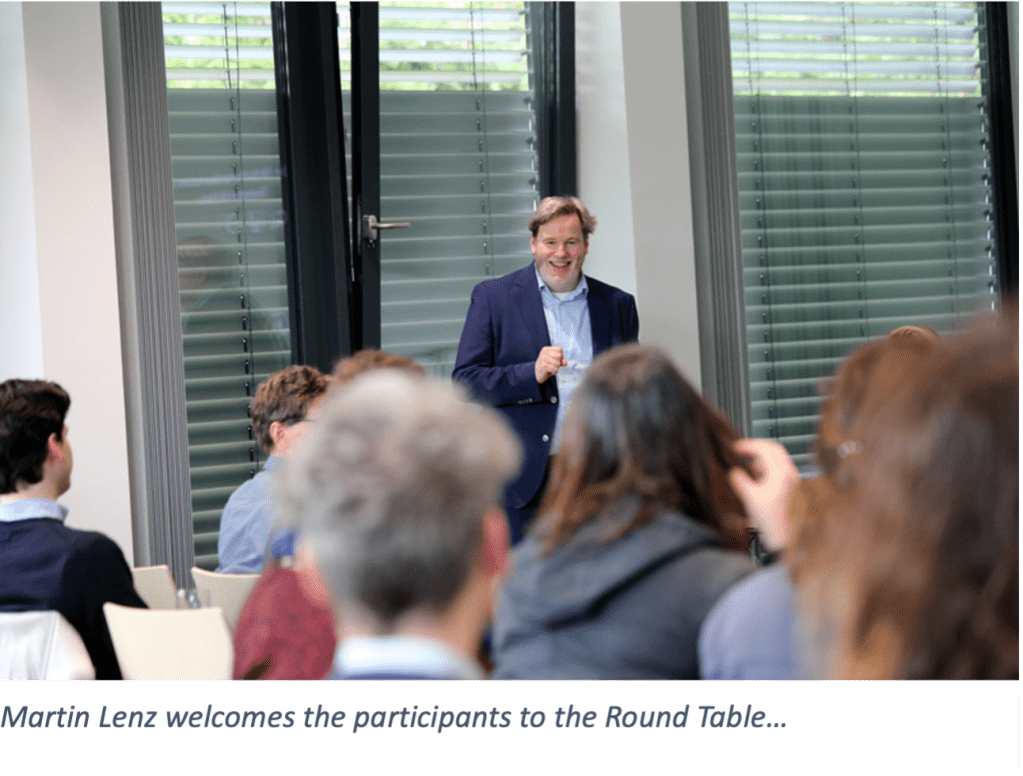
A major conference on early modern philosophy brought together guests from all over the world on the Hagen campus. Organizer Prof. Martin Lenz explains what it was all about.
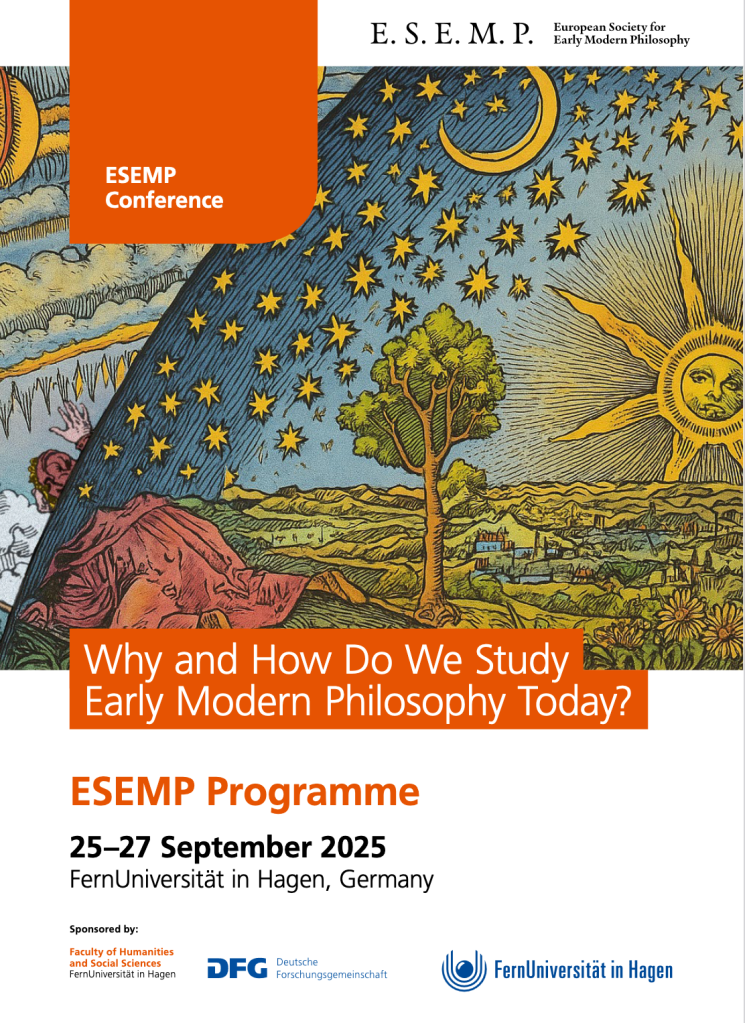
The society has come full circle: In 2004, the European Society for Early Modern Philosophy (ESEMP) was founded with a conference at the FernUniversität in Hagen – on the initiative of Hubertus Busche, who headed the Philosophy I department at the time. Now, around 20 years later, the professional society is inviting participants back to Hagen: to the 7th International ESEMP Congress: “Why and How Do We Study Early Modern Philosophy Today?”
Martin Lenz has headed ESEMP for the past three years, and since 2024, he has also lead the Philosophy I department. He was the lead organizer of the international meeting in Hagen. The German Research Foundation (DFG) supported the conference with its diverse program – from the Early Career Session to the round table. Keynote speakers were Mogens Lærke (Oxford) and Anik Waldow (Sydney).
Clearly identify aims
“We talk far too rarely about the aims, why we pursue our studies in the first place,” Lenz says, highlighting a basic assumption of the conference. What does this mean? “In philosophy, we have what’s known as canon expansion, for example. This means we’re trying to expand the canon with people who have hardly been read before.” These usually include members of underrepresented groups – such as female philosophers. But why expand the canon at all? Why not stick with the older works? “In this case, the answer seems to be a political one,” explains Lenz. “There is the goal of equality, which is followed by a research agenda.” As a researcher, he identifies with this concern. Nevertheless, it is important to reflect explicitly on such objectives, the “why?” – if only to choose the right method for one’s own work.
Utilizing a variety of methods
“And our methods in philosophy have become very diverse these days,” Lenz says, addressing the second major conference question: “How?” Sitting in a quiet room with dusty books? Academic work increasingly rarely corresponds to this image. “Digitalization has brought us many possibilities.” As an example, Lenz cites the so-called Digital Humanities – a still fairly young movement within philosophy that utilizes digital tools. “It’s often about making texts accessible, producing editions, or recognizing frequencies,” says Lenz. “For example, I could instruct an artificial intelligence system to search for all dissertations on a certain topic in a specific region.” Such a computer analysis can, among other things, help to counteract prejudices and subjective misconceptions: “You can then see, for example, that ‘Philosopher X’ wasn’t actually as dominant in their era as assumed.”
“How did we get here?”
For Lenz, the questions of “how?” and “why?” lead to fundamental considerations about the relevance of his discipline. “If we want to understand ourselves, we find ourselves in different histories – depending on our individual backgrounds. For example, can one understand the FernUni as a project if one is unfamiliar with the educational policy situation in North Rhine-Westphalia in the 1970s?” For him, history is not a linear process that inevitably ends in progress; it is asynchronous and dependent on subjective preconditions. “How did we get here? And why haven’t we all arrived at the same point?” Properly applied, philosophy helps answer such questions and organize narrative threads in the history of ideas.
Suggesting alternatives
Although philosophy often remains self-referential, it can provide new food for thought: “Philosophy does not thrive on progress, but on repeatedly returning to themes. It could be viewed as a great conversation spanning all time – within this, however, one often discovers alternatives to the prevailing thinking.” Lenz also locates the lively debates of the international conference in this interplay of old and new, established and alternative.
A vibrant campus
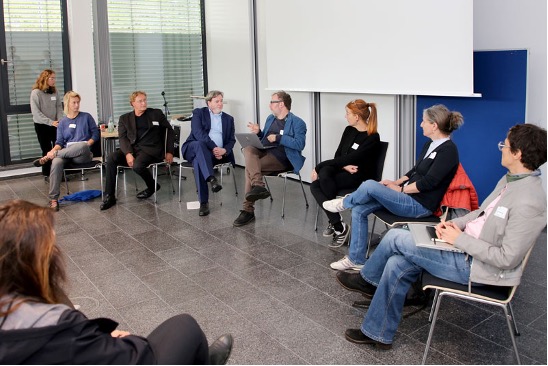
Breaking down established structures wasn’t just about the content: “With the conference, we also offered mentoring for researchers in early career phases.” They were assigned mentors in keeping with specific keywords, thus creating professional tandems. “Established people then attended lectures given by younger people and were able to provide feedback – and, conversely, gather new ideas themselves.” The plan worked, with all generations mingling at the conference. “My impression was that it was very well received.” The coordination both beforehand and on-site paid off. A large team was needed to effectively support the many people on campus and during the supporting program in Hagen. “There was a lot to do!” emphasizes Martin Lenz. “I would like to express my sincere thanks to everyone who helped.”
Перевод: Мария Весте, Университет Линчепинга, Швеция
Предположим, вы стали свидетелем аварии и должны сообщить об этом в полицию. «Ну, красная машина ехала на большой скорости в мою сторону, а потом резко повернула налево», — восклицаете вы. Вы изо всех сил пытаетесь подобрать правильные слова, чтобы точно описать те события и людей, которые вы заметили и их точную последовательность. Будучи по натуре немного педантичной, вы продолжаете исправлять себя. «Сначала казалось, что водитель хотел меня сбить», — такая формулировка в конце концов вас устраивает. — Теперь представьте, что вы пытаетесь уточнить свои впечатления с помощью ИИ. Очевидно, что всегда есть возможность улучшить стиль и грамматику. Но можно ли ожидать, что ИИ (любая Большая Языковая Модель (LLM) улучшит точность ваших фактических утверждений? Нет. Но что это значит, если ИИ все равно используют для улучшения фактических утвердений?
Учитывая то, как работает ИИ, он не имеет опыта в каком-либо смысле. Скорее, он генерирует предложения, предсказывая наиболее вероятную последовательность слов на основе полученных данных из огромного количества текста, на котором он был обучен. Таким образом, он не может улучшить содержание утверждений, основанных на опыте, то есть невозможно исправить содержание текста. Хотя это само по себе не удивляет, последствия, которые эта невозможность имеет в контексте обучения, заслуживает пристального внимания. Обучение частично осуществляется в процессе исправления утверждений. Сейчас, когда люди используют ИИ как устройство не только для сокрытия своих плагиатов, но и для «решения» всевозможных вопросов, этот аспект становится ключевым.
Я неоднократно задавался вопросом, что именно идет не так в контексте обучения с использованием ИИ, и теперь я начинаю думать, что все сводится к потере исправляемости, и к потере понимания того, что вообще означает исправляемость. Короче говоря, видя, что это ИИ как устройство улучшает форму (письменных) текстов в удивительных масштабах, мы не замечаем, что оно обедняет наши отношения с эмпирическим содержанием. Далее я хотел бы исследовать эту потерю в контексте преподавания философии.
Что такое исправимость? Исправимость означает, что утверждение или текст можно исправить. Если я говорю, что идет дождь, вы можете исправить меня, указав, что на самом деле дождя нет. Мы постоянно предлагаем и получаем исправления. Мы улучшаем формулировку того, что мы видели, находя более подходящие фразы. Мы можем различать грамматические и стилистические исправления как исправления формы в отличие от содержания, но часто эти два вида исправлений трудно разделить. Фраза «идет дождь» формально правильна, когда ее используют носители языка, но то, что делает ее правильной для пользователей языка, — это то, как она применяется к общему опыту мира (в котором случается дождь). Если я попрошу вас уточнить свою формулировку, предложив, например, что на самом деле идет проливной дождь, а не просто дождь, я могу иметь в виду одновременно внимание к вашему опыту и общепринятый способ выражения такого опыта в языке. Когда вы думаете о своем опыте и способах его лингвистического выражения, вы, вероятно, будете использовать как лингвистические источники (языковые конвенции, литературу, социолект, который, как предполагается, ожидает ваша аудитория, и т. д.), так и нелингвистические источники (все, что вы можете почерпнуть из других модальностей восприятия). Самое главное, вы будете использовать связи между применением лингвистических ресурсов и нелингвистическим опытом. Другими словами, мы связываем лингвистические конвенции с (нелингвистическими) фактами.
ИИ, напротив, этого не делает. Не имея отношения к миру, он ограничен лингвистическими ресурсами; у него нет других модальностей восприятия, и он не может соотносить лингвистические и нелингвистические факты. Другими словами, хотя он может улучшать формулировки, его нельзя исправлять. Говоря языком Витгенштейна, все, что кажется правильным ИИ, является правильным — а это означает, что нет смысла различать правильное и неправильное. (Есть интересная статья о том, как это узнать на собственном опыте.) Таким образом, мы даже не должны говорить, что у ИИ галюцинации, когда ИИ «выдумывает». Для этого устройства нет значимого различия между галлюцинациями и правильным пониманием вещей.
Сомневаюсь, что я сообщаю здесь какие-либо новости. Так зачем же об этом говорить? Потому что и язык ИИ, и язык создателей этой технологии постоянно напоминают о том, что это устройство обучается, исправляется и совершенствуется. Да, оно совершенствуется в том, что уже делает, но не в каком-либо другом смысле. Это напоминание обманывает многих из нас, заставляя думать, что это улучшение того рода, с которым мы знакомы, то есть ИИ учиться и осваивает новое, прежде неведомое. Это присуждение ИИ нам знакомых качеств обьясняет то, что ИИ теперь всё чаще воспринимается как содержательный, привлекательный или заботливый собеседник. ИИ (или мы сами себя) обманывает многих из нас, заставляя предполагать, что он может «учиться», будучи «исправленным». Но обучение для человека всегда подразумевает отношение (и как соотношение) к миру. Таким образом, главная путаница с ИИ заключается в том, что совершенствование ИИ в любом случае такое же, как мы пытаемся совершенствовать свой собственный способ самовыражения.
Как это влияет на преподавание (философии)? Есть много статей о закате гуманитарных наук в связи с появлением разнообразных ИИ устройств. Учитывая, как эта технология распыляет (не уничтожая полностью, но отрицая возможность закрепления четких координат) наше чувство авторства и нашу культуру чтения, я склонен думать, что весь наш подход к созданию текстов и чтению выйдет из моды и станет уделом зануд. Так же, как длинные соло на электрогитаре или клавишных, которые, казалось бы, были повсеместны в 70-х и 80-х годах, теперь являются уделом нескольких ботаников на YouTube. Так что, на мой взгляд, проблема не в том, что студенты подделывают тексты; проблема в том, что большинство текстов считаются неактуальными. Наряду с навыками и особенностями, которые необходимы для их создания. Умение писать хорошие тексты уже неактуально в мире, где так называемые лидеры обходятся без даже беглого просмотра своих брифингов. Но давайте вернемся к нашей теме. Мое предположение заключается в том, что утрата исправимости, присущая ИИ, является результатом более широкой тенденции, которая была четко признана в книге Гарри Франкфурта** «О бреде собачьем» (вы и без ИИ знаете как перевести выражение об экскрементах крупного рогатого млекопитащего мужского пола в английском язке означающем пренебрежение к сообщению на русский язык, где пренебрежение выражается отсылкой к мужскому половому органу человека) еще в 1986 году: как только вы понимаете, что можете убедить, не прибегая к методам оценки правдивости, вы можете вообще игнорировать правду. В конце концов, вопрос не в том, каким образом ИИ неисправим. Мы можем быстро это выяснить. Вопрос в том, почему мы позволяем исправлять себя устройству, которое не поддается исправлению.
Но это вопрос для умников. Таким образом, освоение длинных письменных текстов, не говоря уже об их написании, не кажется чем-то особенным, более того в настоящее время это не кажется многообещающим занятием. И не только потому, что у студентов есть стимулы подделывать свои работы, но и потому, что в принципе практически нет стимулов для создания таких работ. Зачем учиться играть на фортепиано, если есть клавишные инструменты с автоматическим аккомпанементом? Конечно, их звучание может быстро надоесть. Но кому какое дело, если это все, что есть в наличии? Итак, еще раз: проблема не в мошенничестве, а в неактуальности. Пишу это, я чувствую себя как динозавр, оплакивающий утрату своей естественной среды обитания. И, вероятно, это именно так: старик, жалующийся, что никто не ценит красоту, скрытую в искусстве, которое он так любит. И что с того? Действительно, что с того?
Что же остается учителям? Если вы не слишком беспокоитесь о плагиате, вы можете направить свою энергию на то, чтобы заставить людей думать, не анализируя тексты, а придумывая хорошие подсказки для ИИ или совершенствуя свои навыки видеомонтажа. Другими словами, хотя некоторые продукты (такие как хорошо написанные эссе) в будущем будут просто создаваться ИИ, вы можете помочь студентам улучшить «их» работу, сосредоточившись на том, чтобы помочь им использовать инструментарий этог и будущих устройств искусственного интеллекта. Однако остается вопрос: для чего нужен этот инструмент, если мы признаем, что написание текстов не имеет значения?
_________
* в моем переводе используется обозначение ИИ (искусственный интеллект) для обозначения разных программ (в статье – они обозначены как устройства), в оригинале Мартин Ленц упоминает программу ЧатГПТ, которая специализируется на обработке текстов
** В личном разговоре Мартин Ленц исправил мое (неинфомированное) представление о концепции БУЛШИТ, который нельзя потому, что это устойчивый философский термин. Я все же сохраню свою интерпретацию этого обозначения, которое вариативно в рамках разных языковых картин мира.
CfP: Reading as a Social Practice. An Interdisciplinary Workshop
Berlin, 27-28 March 2026
Organised by Irmtraud Hnilica (Mannheim/Hagen) and Martin Lenz (Hagen)
According to a widespread consensus, we are currently living through a reading crisis. This workshop seeks to take a step back from the rhetoric of decline and instead raise the question of how reading itself can be conceptualised and approached from different disciplinary perspectives, particularly in philosophy and literary studies. To a first approximation, we propose that reading is determined not only by texts themselves or by individual readers, but mainly by the interactions between readers. We especially invite submissions engaging with this claim—whether through historical investigations of reading cultures, theoretical reflections on the social dynamics of interpretation, or analyses of contemporary practices in both analogue and digital spheres. We explicitly welcome submissions from scholars at all career stages. The aim of this international workshop is to spark new collaborations that will eventually result in a joint interdisciplinary network devoted to the study of reading as a social practice.
To submit, please email an abstract around 500 words to Martin Lenz (martin.lenz@fernuni-hagen.de) no later than 31 October 2025. Please use ‘Reading 2026’ as the header of your email. The email should contain a short bio of the author‘s details (including position and affiliation). We hope to notify you about the outcome by the end of November 2025.
The languages of the workshop are English and German. For each talk, there will be time for a 30-minute presentation, with about another 15 minutes for discussion. Upon acceptance, we grant reimbursement of accommodation and travel expenses.
***
CfP: Lesen als soziale Praxis. Interdisziplinärer Workshop
Berlin, 27./28. März 2026
Organisiert von Irmtraud Hnilica (Mannheim/Hagen) und Martin Lenz (Hagen)
Einem weitverbreiteten Konsens zufolge erleben wir derzeit eine Lesekrise. Dieser Workshop möchte einen Schritt zurücktreten von der Rhetorik des Niedergangs und stattdessen die Frage stellen, wie Lesen selbst konzeptualisiert und aus verschiedenen disziplinären Perspektiven – insbesondere in der Philosophie und Literaturwissenschaft – betrachtet werden kann. In einer ersten Annäherung schlagen wir vor, dass Lesen nicht nur durch die Texte selbst oder durch individuelle Leser*innen bestimmt wird, sondern maßgeblich durch die Interaktionen zwischen Leser*innen. Wir freuen uns auf Beiträge, die sich mit dieser These auseinandersetzen – sei es durch historische Explorationen von Lesekulturen, theoretische Reflexionen über die sozialen Dynamiken der Interpretation oder durch Analysen zeitgenössischer Praktiken in analogen wie digitalen Räumen. Explizit erwünscht sind Einreichungen von Wissenschaftler*innen aller Karrierestufen. Ziel dieses internationalen Workshops ist es, neue Kooperationen anzustoßen, die in ein gemeinsames interdisziplinäres Netzwerk zum Lesen als sozialer Praxis münden sollen.
Bitte senden Sie ein Abstract von ca. 500 Wörtern bis spätestens 31. Oktober 2025 per E-Mail an Martin Lenz (martin.lenz@fernuni-hagen.de). Verwenden Sie als Betreff Ihrer E-Mail bitte: Reading 2026. Bitte ergänzen Sie Ihr Abstract durch eine akademische Kurzbio mit Angaben zu Position und Institution. Wir hoffen, bis spätestens Ende November 2025 Rückmeldung geben zu können.
Workshopsprachen sind deutsch und englisch. Vorgesehen sind 30 Minuten Vortrag und je 15 Minuten Diskussion. Fahrt- und Übernachtungskosten werden übernommen.
Following our Call for Abstracts last November, I am now happy to report that the Society for Early Modern Philosophy (ESEMP) runs its seventh conference at Hagen University, the place where the society was actually founded in 2004. In the meantime, we’ve finalised the downloadable conference programme (more details will be added on the conference website in the coming days). In case you want to register as a guest, there is an extra page for this.
At this point, I take the liberty to thank my wonderful team at Hagen for working ceaselessly to make (not only) this conference happen as well as the Hagen Faculty of Humanities and Social Sciences and the Deutsche Forschungsgemeinschaft for generous financial support.
The aim of this conference is to bring together leading experts and young talented scholars from all over the world to explore ways of approaching early modern philosophy and reflect anew on the aims of doing so. Following recent discussions in the field, we will wonder, for instance, whether we should favour historical over so-called rational reconstructions of texts or what precise aims are served by extending the canon. Likewise, we will ask how advances in the digital humanities shape our field. Even if one works in more traditional ways, one has to inquire whether common assumptions about how to place and study texts, figures or debates still stand. A second focus of our conference concerns (practical) issues concerning especially early career researchers. In this spirit, the conference includes a mentoring programme intended to connect mentees with experienced researchers who will provide advice on papers.
Suppose you witness an accident and have to report it to the police. “Well, the red car drove with high speed towards me and then took a sharp left turn”, you exclaim. You try hard to find the right words to capture the precise sequence of events and people you’ve noticed. Being a bit fussy by nature, you keep correcting yourself. “To begin with, it seemed as if the driver wanted to run me over.”, is the formulation you eventually settle on. – Now imagine you try to refine your impressions using ChatGPT. Obviously, there is always room for improving on style and grammar. But can you expect ChatGPT (or any LLMs or AI) to improve on the accuracy of your factual statements? No. But what does it mean if it is used to that end anyway?
Given the way ChatGPT works, it has no experience of the world in any sense. Rather, it generates sentences by predicting the most likely sequence of words based on the input it receives and the vast amount of text it was trained on. Thus, it cannot improve on the content of any statements relying on experience. While this is no surprise, the repercussions it has for teaching contexts deserve careful attention because such contexts thrive on the correction of statements. Especially now that people not only use this device to hide their plagiarisms, but also to “decide” all sorts of questions. I’ve been wondering repeatedly what precisely it is that goes wrong in teaching contexts with the use of AI and now I begin to think that it comes down to a loss of corrigibility, a loss of understanding what corrigibility even means. Put in a nutshell, seeing that this device improves the form of (written) texts in amazing dimensions, it makes us blind to the fact that it impoverishes our relation to empirical content. In what follows, I’d like to explore this loss with regard to teaching philosophy.
What is corrigibility? Corrigibilty means that a statement or text can be corrected. If I state that it’s raining you can correct me by pointing out that it’s in fact not raining. We offer and receive corrections all the time. We improve the way of phrasing something we’ve seen by finding more adequate phrases. We can differentiate between grammatical and stylistical corrections as corrections of form as opposed to content, but often the two are difficult to keep apart. The phrase “it’s raining” is formally correct when used among English language speakers, but what makes it correct for these users is how it’s applied to a shared experience of the world (in which it happens to rain). If I ask you to refine your phrasing, suggesting for instance that it’s really pouring and not just raining, I can mean at once to pay attention to your experience and the conventional way of expressing such an experience in the English language. When you think about your experience and modes of expression, you’ll likely involve linguistic sources (your language conventions, literature, the sociolect your audience is supposedly expecting etc.) as well as non-linguistic sources (whatever you can gather from other sense-modalities). Most importantly, you’ll involve relations of applying linguistic resources to non-linguistic experiences. In other words, we relate linguistic conventions to (non-linguistic) facts. ChatGPT, by contrast, doesn’t do that. Having no relation to the world, it is confined to linguistic resources; it has no other sense modalities and it has no way of relating linguistic to non-linguistic facts. In other words, while it can improve on formulations, it cannot be corrected. Put in Wittgensteinian terms, whatever seems correct to ChatGPT is correct – and that means that there is no sense of distinguishing between correct and incorrect. (There is an intriguing piece about learning this the hard way.) Thus, we shouldn’t even say that it’s “hallucinating” when it’s “making things up”. There is no meaningful distinction for this device between hallucinating and getting things right in the first place.
Now I doubt that I’m spreading any news here. So why is this worth saying? Because both the language of ChatGPT and of the merchants of this technology constantly suggests that this device is learning, being corrected and improved. Yes, it’s being improved at what it does already, but it’s not improved in any other sense. This lingo tricks many of us into thinking that the improvement is of the kind that we are familiar with. Just like AI is now increasingly taken to be a meaningful, sexy or caring interlocutor, it tricks many of us into assuming that it could “learn” by being “corrected”. But learning, for humans, always involves a relation to the world. The great confusion about ChatGPT, then, is that it would be improved in any way that we would try to improve our own way of expressing ourselves.
How does this affect teaching (philosophy)? There are many pieces about the decline of the humanities in the face of ChatGPT and related devices. Given how this technology diffuses our sense of authorship and our reading culture, I’m inclined to think that our whole way of cherishing text production and reading will go out of fashion and become a nerdy niche. Just like long electric guitar solos or keyboard solos, which seemingly were ubiquitous in the 70s and 80s, are now a thing for a few nerds on youtube. So as I see it, the problem is not that students are faking texts; the problem is that most texts are considered irrelevant. Along with the skills and features that go into their production. Being able to write good texts is already irrelevant in world where so-called leaders get by without even glancing at their briefings. But let’s stick to the current story. My hunch is that the loss of corrigibility ingrained in ChatGPT is the outcome of a larger trend that was clearly recognised in Harry Frankfurt’s On Bullshit as early as 1986: Once you realise that you can convince without sticking to techniques of truth-evaluation, you can disregard truth altogether. After all, the question is not in what way ChatGPT is incorrigible. We can figure that out quickly. The question is why are we letting ourselves be corrected by a device that is incorrigible.
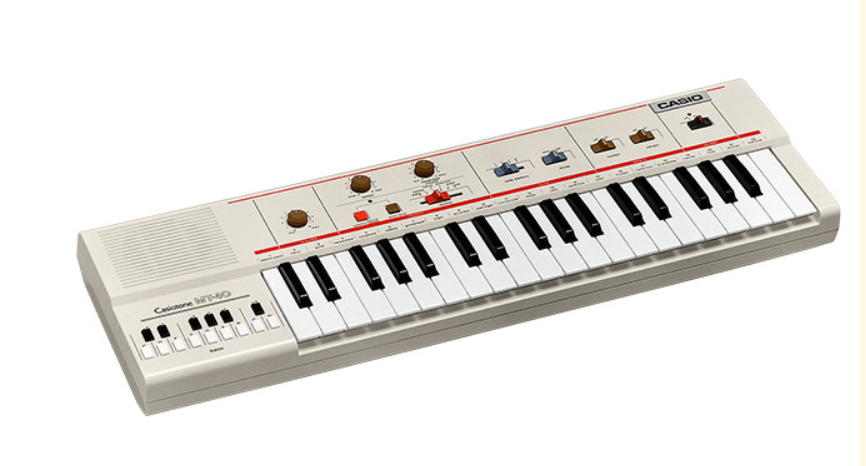
But that’s a question for nerds. Mastering long written texts, let alone writing them, then, doesn’t seem to hold much of a promise for anything now. This is not just because students have incentives to fake their work; it’s because there are hardly any incentives to produce such work in the first place. Why do you need to learn to play the piano if you have keyboards with automatic accompaniment? Of course, you might get sick of their sounds quickly. But who cares if that’s all that’s on offer?
So again: the problem is not cheating; it’s irrelevance. Writing this, I feel like a fossil decrying the loss of its natural habitat. And that’s probably what it is: An old man whining that no one recognises the beauties hidden in the art he cherishes. So what? So what indeed?
So what’s left for teachers? If you don’t worry too much about plagiarized texts, you might adjust your energy towards getting people to think, not by by analysing texts, but by coming up with good prompts for ChatGPT or by enhancing your techniques of video editing. In other words, while certain products (such as well-written essays) will simply be done by ChatGPT in the future, you can support students in improving “their” work by focussing on helping them to use this and the AI devices to come as a good tool. The remaining question is, though, what this tool is good for, once we admit that writing texts is irrelevant?
“… interpretation is the source of texts, facts, authors, and intentions.”
Stanley Fish, Is There a Text in This Class?
Do you remember when you first committed some of your own thoughts to paper? Perhaps you kept a diary, perhaps you wrote poems or lyrics or crafted a letter to a friend. Perhaps you had worked on the aesthetics of your handwriting. Anyway, there it was. Something that you had written could now be read and, of course, misread in a distant place during your absence. This striking distance became even more evident to me when I had seen my words, not in my clumsy handwriting, but in the typeface of a word-processor. Imagining that someone would read my words not as my personal scribblings but as a text in an authoritative typeface, made me at once proud but also seemed to diminish my personal impact on the text. In any case, the absence or possible absence of the author from something written, I suppose, is what turns texts into something objective. As I see it, texts become objective when they can be read independently of the writer, of what the writer says and thinks. If this is correct, it seems that written texts are fundamentally different from spoken texts or thoughts. In turn, this makes me wonder whether it’s written texts alone that afford the interpretive openness allowing for different readings or interpretations as we know them in the humanities of our time. In what follows, I would like pursue some perhaps naïve musings on this issue.
Thinking versus speaking versus thought?
If you observe what you say in contrast to how you write, you’ll probably notice a stark difference between spoken versus written language. While academics sometimes seem to try and imitate the grammatical standards of their written language in their speech, we quickly notice that the grammatical rules, word choices and other aspects are vastly different. Pondering on this issue quickly brought me back to the ancient and medieval doctrine of “three kinds of language”, according to which thought is expressed through spoken language and spoken language is signified by written language. But once you notice how different already speaking and writing really are, it’s difficult to give much credit to said doctrine. The very idea that writing is a set of signs of what is spoken strikes me as a very impoverished understanding of the difference. This makes me wonder when written language was first considered as a set of signs independently from spoken language. Following Stephan Meier-Oeser’s work, my hunch is that William of Ockham and Pierre D’Ailly in their logical treatises are among the first to deem written signs as independent from spoken language. (Sadly, it’s not entirely clear why they hold this in contrast to many of their fellow thinkers.) Now, once you think of written language as independent from speech it seems that you acknowledge something that could be the objectivity of the written text. Of course, long before the written text is acknowledged as an independent signifier, there have been sacred texts like the Bible that were considered objective in some sense. But experiencing our very own writings as independent from our speaking must do something to the way we think about texts and their interpretability more generally, or so I think.
The written text as an objective ‘thing’
The way we encounter written texts or books (be it on paper or screens) seems to present them as distal objects, independent from how we interact about or with them. Like the table in front of you, the book on your desk or in your pdf isn’t altered when you look away. This experience is certainly at least in part responsible for the common assumption that texts and theirmeanings are stable items independently of us. Likewise, our experience of reading is commonly thought of as grasping something external to us or our interactions. But why? While I myself have begun to think that reading is in many ways a matter primarily dependent on interactions between readers, I equally wonder how written texts, non-sacred texts in particular, have earned the status of independent carriers of meaning that can be hit or missed. Our current reading practices inside and outside of academia seem to corroborate this assumption. – (What does it say? This is a question that silences classes but equally fosters the pretence that texts are stable unchanging sources of meaning that provide all the necessary constraints for possible interpretations. Yet, not knowing whether we’re reading a recipe or a a poem, we are probably unable to tell the genres apart without context. “Context” – this harmless little term obscuring all the greatly important factors allowing for recognition, and constantly underestimated as a “side issue” when it comes to competing readings!) But what does it take for a written text to be actually seen as independent in such ways?
The advent of ChatGPT
Investigating the question of the objectivity of texts will take some time. But currently it seems that this objectivity becomes undone in quite unexpected manners: the advent of chatGPT does not only call into question the production of texts through proper authorship. Rather, it also calls into question the independence of written language as a system of signs, thriving on a supposed text-world relation having been taken for granted for a very long time. Reading a piece of text, we can no longer presume that it was produced by a person having a relation to the world, to themselves and to other people making it a rational item, interpretable by rational beings, or simply readers.
Pointing is a nonverbal gesture. Often, the index finger is used. Like an archer aiming an arrow at a target, the index finger aims at something. This gesture is meant to direct another person’s attention, to move their gaze so that they focus on the object indicated by the finger.
It is also possible to point with words: “this,” “there,” “here,” “now,” “you,” and “I” are all terms that point. “I,” “here,” and “now” are especially interesting, as they are indexical terms that refer to the person, place, and time of their use. If someone asks, “Who wants another dessert?” I can say “I,” and thereby point to myself, whatever that might mean. And if someone asks, “Where did my dessert go?” I might say “here” and point to my belly.
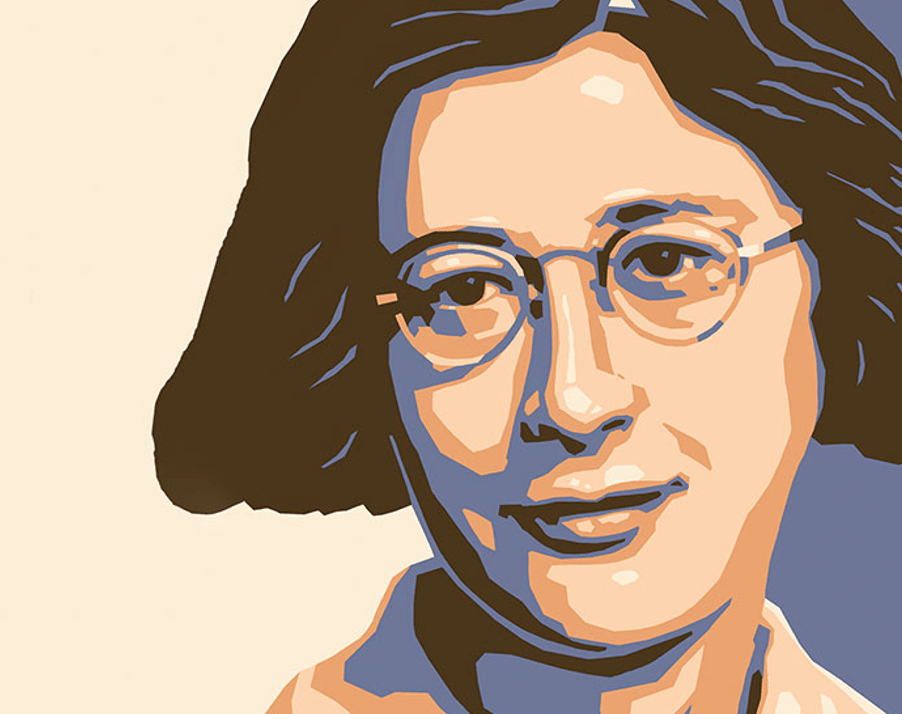
Texts in which one often finds the “I” are novels written in the first-person perspective, such as Günter Grass’s The Tin Drum, told by its hero Oskar Matzerath; autobiographies, like Goethe’s Poetry and Truth; confessions, such as those by Augustine or Rousseau; and diaries, like those of Ludwig Wittgenstein and Simone Weil. The boundaries between these genres are fluid. Autobiographies and confessions are written, like novels, for readers other than the writer and may contain some or many fictional elements. Most diaries are not fiction and are not intended for the public. Confessions are originally probably a legal genre. The term conscientia refers, according to Cicero, to an inner forum, that is the highest authority in judging about virtues and vices and stands above publicity.[1] We can relate conscientia in this context also to what is now called “guilty conscience”. A prosecutor might read out his accusations, and the defendant turns pale—he shows conscientia. After that, he might confess, show penitence, and thereby change the judge’s mind so that he is seen not just as a villain but as someone capable of shame and regret. Thus, a confession is directed against a possible accuser and judge. From the legal realm, this idea moved perhaps into religion (or was it the other way round?), where God is thought of as an almighty judge.
These complications are not unimportant to our topic, since the self is sometimes described as an inner tribunal. The accusing and praising voices of our parents may be internalized and continue “within us,” producing an inner polylogue. The metaphorical inner theater and the drama of accusation, confession, praise, and regret played out on its stage can be seen as what we call “the self”, if we follow philosophers like David Hume and George Herbert Mead.
II
Diaries are private chronological records of the diarist’s daily activities, thoughts, feelings, and reflections—perhaps also of regrets, accusations, and confessions made to oneself—a written manifestation of the play that goes on in the inner theater, perhaps constantly and sometimes observed by the author.
Writing for a public audience about oneself means projecting an image of oneself onto others, trying to get them to accept a certain narrative. This could mean that one is not perfectly honest. Neither the image one has of oneself nor the one projected to the public may be true. But projecting an image different from the one you have of yourself means you are not being truthful. Truth and truthfulness are two different things, as Bernard Williams has shown, following Nietzsche (Bernard Williams, Truth and Truthfulness. An Essay in Genealogy, Princeton 2002). We might not be able to reach truth, but we can try to be truthful.
It seems that we expect writers of private diaries to be truthful, or even that a diary is an instrument for truthfulness. That truthfulness is not realized in public writing does not have to be a cause for moral criticism. One does not necessarily want the public to know everything about oneself and may have good reasons for that. Perhaps one wants to protect other people who might still be alive when the diaries are published. But if one writes a diary just for oneself, it is different. We seem to expect that people want to be truthful to themselves, whatever that might mean. We might even expect that private truthfulness has a therapeutic effect for the diary writer: She might become able to face facts she could not face before she opened her diary and tried to write them down. But if you look more closely, writing a diary only for oneself seems a very strange endeavor. Who exactly is one writing to? And why should one write to oneself? Anne Frank wrote “Dear diary” at the start of each entry in her book, as if addressing another person.
III
Writing a private diary seems to be a reflexive act. This is easier said than understood, because all reflexive acts are epistemically risky. Reflexivity is connected to the dangers of paradox and infinity. Think about the liar paradox: “All Cretans are liars,” says the Cretan. Or about Russell’s paradox: the barber who shaves all those who do not shave themselves. Both paradoxes result from reflexivity. Russell’s attempt to avoid them by a theory of types is as unsatisfactory as Wittgenstein’s remark to Turing that these paradoxes are just silly games. Wittgenstein underestimated reflexivity and rarely tackled its pitfalls, although his distinction between saying and pointing might be more helpful in dealing with them than Russell’s approach. Russell tried to argue the paradoxes of reflexivity away by distinguishing different levels of saying: object and meta-levels. Wittgenstein tried to ignore them.
What kind of reflexivity occurs when you write a diary? You or your self are not objects that can be studied like a stone, a vase, or a dead rabbit. Nor are you moving to a meta-level by considering what it means to study yourself. Supposedly, you are really studying yourself—or more exactly, what happened to you. You are listening to and watching the inner theater that is performed, and you write down your observations of these performances. So, are you really writing to or about yourself when you write a diary?
When you write your experiences down, it seems that you must have already known these experiences before writing them. If you did not already knew them in the way you know them when you write them down, then you are not writing about or to yourself. If writing your experiences down changes you, then they are not your experiences anymore after you have written them, but the experiences of your past self—if there is such a thing as a past self (which I doubt)? Whoever writes a diary probably has the experience of meeting the person they once were when reading entries from some time ago.
To know your own experiences, especially to know them verbally so that you can write them down, means to interpret them through the words you choose to fix them on paper. If an interpreted experience is something other than the not-yet-interpreted experience, and if you are, as a mental being, your stream of experiences, memories, thoughts, wishes, and so on, then you change yourself by interpreting your experiences. Writing a diary would then be a transformative practice.
Human minds are constantly transformed anyway—by new ideas, by memories popping up and disappearing. But they could also be transformed by reflexive acts like willfully remembering, meditating, or writing a diary, which might be a mixture of both activities: remembering and interpretative meditation. This activity of self-transformation is paradoxical because it is unclear who is doing it and who is being transformed. Who is watching your memories? Who is interpreting them? Is the past self transforming itself into a future self, or is a present self transforming a past self into a future self?
On the one hand, this process seems banal, like washing yourself. On the other hand, it is not banal, since washing yourself brings your body back to an old state—the state of cleanliness before you became dirty. Interpreting your experiences does not return you to any original state but brings about a new understanding of yourself and thus a new self or a new state in the fleeting mental process we call our self.
These observations may seem abstract, but they are very relevant for Simone Weil’s diaries, to which I will turn now, because one important topic of her diaries is the self or the soul, or the Ego, as she writes, and the necessity of its disappearance. Isn’t it strange, that somebody who wants the self or the Ego to disappear writes a diary?
IV
Simone Weil wrote diaries that were not intended for publication. Precisely for this reason, they are especially valuable—not only because they are considered truthful. Weil is a very original philosopher because she closely relates all of her thinking to her life experiences, which are described in her diaries. Contemporary academic philosophy of many different schools, analytical, phenomenological, but also of critical theory, often suffers from a lack of lived experience.
Unlike experimental sciences, philosophy is not conducted in a laboratory where new experiences are produced. Most academic philosophers shy away from connecting their thinking to their lives, as their lives are often bureaucratic, spent reading and writing in university offices. This was not the case with Simone Weil. She worked as a political activist, a school teacher, a factory worker, a member of the resistance, who wanted to fight and serve as a nurse, a religious enthusiast, who observed her ecstatic religious experiences, and she suffered severely from migraines, making this and all her other sufferings an object of philosophical reflection. Often, in her letters and diaries, she like to quote Aschylos: “to pathei mathos” – “knowledge comes through suffering” (Cf. Robert Zaretsky, The Subversive Simone Weil. A Life in Five Ideas, Chicago 2021, 7).
Her life-experiences and their interpretation in her diaries are very relvant in two ways: politically and in their relation to religion, because Weil expierences a conflict between her political and her mystical religious experiences. In both Eastern and Western philosophical and non-philosophical literature, one can find many reports and reflections on mystical experiences and transformations. Two important more recent sources in the West are William James’s Varieties of Religious Experience from 1902 and Robert Musil’s The Man Without Qualities from 1930. Texts about mystical transformations written for the public are not unproblematic. The realm of religious development is not immune to the all-too-human drive for fame and superiority. In competitive societies, people want to excel and be recognized as special or “higher” than others. Just as there is intellectual careerism, where people are more interested in themselves and their position in an intellectual hierarchy than in the truth, so there is also spiritual careerism. Texts about ecstatic religious experiences written for publication are therefore always under suspicion. Since Weil did not write for a public audience, her texts are immune from this suspicion.
V
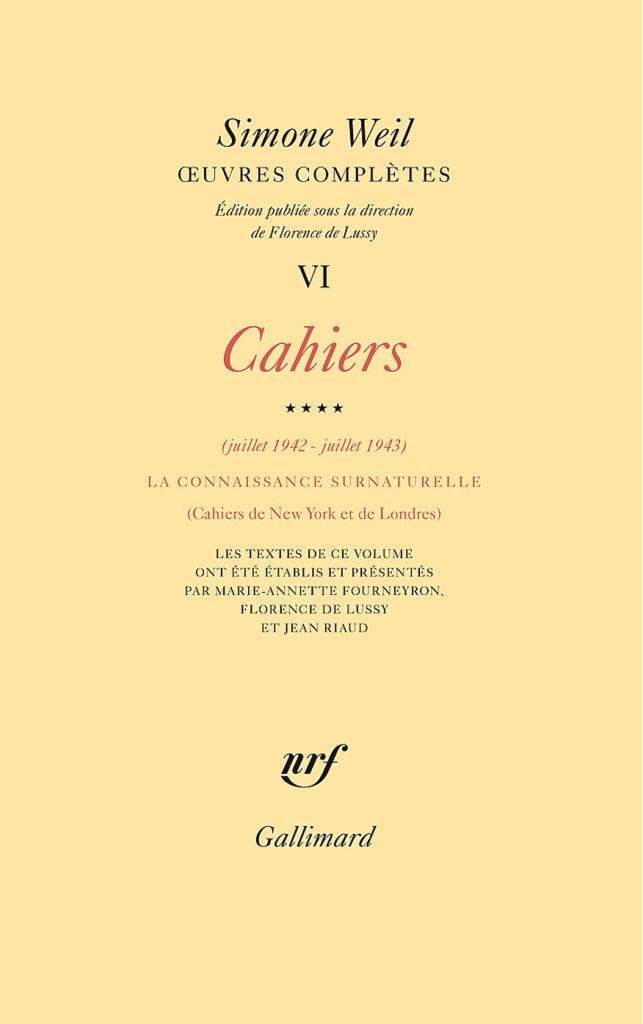
In some of her diaries, such as her factory diary from 1934–35 (published in 1951), Weil uses “I” quite frequently. This does not seem different from her letters. In her famous Cahiers, however, she rarely uses “I.” She writes about the “I” or “the Ego”, but rarely about herself. Yet the Cahiers are not entirely different from her other unpublished writings; in fact, they seem to interpret her personal experiences on a more abstract level, so that we can see levels of reflexivity between her more personal notes and the Cahiers. Perhaps these levels of reflexivity are connected to levels of paradoxes, since Weil interprets her personal experiences againt a philosophical and mystical background, which suggests, that the I, the Ego should disappear.
In the following I want firstly to consider her experiences as a factory worker, the political views connected with them, and secondly her mystical theology and philosophy as manifested in the Cahiers. I want to relate these two diaries because they point in different directions regarding the self, which seem to contradict each other.
The factory diary points to the degradation of the worker’s self—the anxiety and slavery workers endure, unable to control their own time, suffering exhaustion that deprives them of the chance to reflect on their situation and articulate their problems independently of party jargon. Weil accuses those who claim to be active on behalf of workers of not making an effort to share their experiences:
“…when I think that the great Bolshevik leaders proposed to create a free working class and that doubtless none of them—certainly not Trotsky, and I don’t think Lenin either—had ever set foot inside a factory, so that they hadn’t the faintest idea of the real conditions which make servitude or freedom for the workers—well, politics appears to me a sinister farce.” (Weil, Seventy Letters, Oxford 1965, p. 15)
The way Weil writes about her factory experience points to a threatened self, one humiliated and unfree under the conditions of assembly-line work in a large factory. I believe these interpretations are correct in a sense, but they do not go far enough, because Weil as a mystic, did not believe in the reality of the self. I believe that, because of this background, she did not believe in a political solution for the dire situation of factory workers. She writes about this possibility, and especially about Marxism, as follows:
“Humanity has always placed in God its hopes of quenching its thirst for justice. Once God no longer inhabited men’s souls, that hope had either to be discarded or to be placed in matter. Man cannot bear to be alone in willing the good. He needs an all-powerful ally. If this ally is not spirit, it will be matter. It is simply a case of two different expressions of the same fundamental thought. But the second expression is defective. It is a badly constructed religion. There is, therefore, nothing surprising in the fact that Marxism has always possessed a religious character. It has a great many things in common with the forms of religious life bitterly attacked by Marx … as the opium of the people. But it is a religion devoid of mystique…” (Weil, Oppression and Liberty, London 2001, 154)
A revolution will not help workers in her eyes, because in a revlutionary fight they will be used by the powerfull just as much as in the factory. Opression does not stop by revolutions, she believes:
„The word ‘revolution’ is a word for which you kill, for which you die, for which you send the laboring masses to their death, but which does not possess any content.“ (Oppression and Liberty, 35)
VI
Her mysticism, which is at its core a Christian one—though she also studied and commented on Vedanta and Zen mysticism—is characterized by practices that attempt to dissolve the illusion of a substantial self as the center of suffering. Its ultimate goal is to end the identification of oneself with one’s own body. The central claim in this context is that:
“The whole universe should become my body.” “Tout l’univers devrait devenir mon corps.” (Œuvres complètes VI. Cahiers, Paris, 1994, 345)
The attempt of the mystical practices is to go beyond the borders of one’s own body by the observation of severe suffering as a means to free subjectivity, or the soul, from its limitations. Working with your body in this way is described by Weil as using the body as a lever:
“The body is a lever for salvation.” (Œuvres complètes VI, 234) “The body is a lever with which the soul acts upon the soul. Through the discipline imposed on the body, the wandering energy of the soul exhausts itself. … finally it is exhausted and lies down. … the wandering part of the soul, when the body is pinned down … it stirs … finally it exhausts itself and disappears.”(Œuvres complètes VI, 264)
If this work is successful, the personal “I” disappears, perception becomes impersonal, and perceptions are no longer disturbed by the survival interests of the very body with which the self was identified. Everything becomes beautiful; all threats relative to the evaluations of the body disappear:
“I have to disappear, so that the things which I see become perfectly beautiful, because they are not things anymore. The whole universe should become my body.” (Œuvres complètes VI, 345) “God created me as a non-being that appears to be … The I is nothing. But I have no right to know that.” (Œuvres complètes VI, 124.) “Our disappearing I has to become a hole, through which God and creation can look at each other.” (Œuvres complètes VI, 316)
Even hopelessness can be a lever for the mystic, Weil thought it takes one away from wanting, from being directed onto the future, so that we can see the beauty of what is present.
VII
Factory workers are not engaged in mystical practices during their work. Their self is not sacrificed for an insight into God or the absolute. Theoretically, they could take their work as a mystical practice, but in reality, their self is suppressed and damaged for profit. Their bdoies and minds have become means to serve machines. (One could also say of academics that their minds have become means, in some cases, to serve careers.) Workers do not seek to transcend the limits of their bodies in order to experience ecstatic religious states, but they may be forced to work beyond their bodily limits due to the demands of the assembly line.
The same could be said of a migraine sufferer like Weil. Such a person could, in theory, use her pains as a means of transcending her body. However, if she has no religious interests, she will just take morphine. Simone Weil, who suffered a migraine attack during a Catholic service, in fact used her pain at this event, as she reports, in the same way as a Buddhist monk uses his pains during long meditation. She tried to see her body ‘from the outside’. However, no doctor would advise a migraine patient to do so. And no political activist would advise a suffering worker to do this.
The same could be said of the strict timetables and isolation in prisons and Christian or Buddhist monasteries. In both cases, people in these institutions may be deprived of the freedom to manage their time or communicate as they wish. However, in a monastery, where people voluntarily follow a strict routine, this means something different to a prison. A person’s social and physical identity can be broken by work or torture in order to dominate them. This can happen in prison, in a military training camp or in a factory. Alternatively, a person may try to break her own social and physcial identity because she considers this identity an illusion that is bad. The social and physical identity is considered by mystics as a kind of prison or a machine that forces constant evaluations of everything and everyone, leading to fear, hatred and arrogance and ultimately suffering, but not to joy and beauty.
Thus, the different practices that break the social and physical self are tools for different aims, like the knife of a mugger is different from that of a surgeon. The mugger tries to threaten you with his weapon; the surgeon tries to heal you. However, both might attack your body.
Scientific research from both neuroscience and social science suggests that the self is a construct, an invention tightly connected to bodily functions and expierences that are mainly related to self-preservation. However, there seems to be no individual self beyond these processes that wants to preserve itself. As far as we know, our mental history is not centred around a spiritual substance. This seems to be a Cartesian myth. In this sense, modern scientific insights and mystical experiences of selflessness converge. This does not mean that suffering caused in personal relationships, working conditions or correctional facilities is justified in any way. One could argue that suffering should be avoided unless it is used by organisms in a reflective way as a means to an end.
However, here a paradox arises: What is this reflexivity that tries to transcend the body and break social identity? Can this reflexivity be thought about in a way that is different to the approaches of Descartes and Kant, who believed in a free-thinking substance (Descartes) or an individual autonomous person who can initiate chains of causality from nothing (Kant)? Simone Weil demonstrates this reflexivity in her diaries when she reflects on her suffering, points to her body states in the factory and in her migraine attacks and interprets these states as a means of overcoming the limitations imposed on her by certain social and historical conditions. Her diaries demonstrate that such reflexivity is possible. However, they do not explain what this reflexivity is, if it is not a capacity of the socially constructed Ego, of a particzular person. Perhaps Weil thinks it is not possible to say what this reflexivity is, since our talk is always objectifying. When she says, “The I is nothing. But I have no right to know that’, one could perhaps add the following statement: ‘Reflexivity is not a thing, does not belong to a thing or individual, but it is not nothing, perhaps its everything. But as finite beings, we have no way of knowing that.’ But perhaps we can experience this reflexivity.
A question for scholars. – How can we spend a lifetime on a chapter in Aristotle and think we’re done with a student essay in two hours? Both can be equally enigmatic.
Writing this little joke back in 2018, ChatGPT was still unheard of in my part of the world. My point was that our teaching practice results in our unlearning to read and encourages mindless writing and reading. Back then, people responded by emphasising that, contrary to texts of “proper” philosophers, student work is being produced and read to be judged with regard to specific skills, so it doesn’t merit further attention. With the advent of ChatGPT, the judging part of this kind of exercise went down the drain. But even back then, the thought that sparked the worry behind my joke was that we have students produce texts that no one wants to read and, basically, that we train forms of writing that no one wants to read. After all, we now know that it’s not only student papers that often get no more than a quick glace, but equally work of peers. As I see it, then, ChatGPT did not alter this situation but just made our practice of mindless reading and writing more visible. At least, we talk about it now.
If this contains at least a grain of truth, then we knew very well before the advent of ChatGPT that our exercises weren’t very promising. Why? Of course, writing is a great thing and should be practised, but grading writing is another matter altogether. Either our responses would have to be very formulaic or they would have to be so time consuming that no one could serve larger classes. So the problem is not that students now have better ways of cheating. The problem is that we don’t and didn’t act well as readers of our student work. No matter whether we act like cops to catch cheaters or just keep rushing through masses of work: we’re acting as a bad role model for good reading and writing. If we rush through student papers, we demonstrate that we only care about grading. Students learn that they should mainly care about grades, too. It’s no surprise, then, that what gets perfected is not the writing but the techniques of cheating.
But this doesn’t mean that students don’t want to write or learn writing. Rather, they probably don’t want to write for readers who spend two to five seconds on a paragraph that took two days to compose. Perhaps what we (should) really feel, now that ChatGPT makes it almost impossible to distinguish real from hallucinated work, is relief – relief that student essays can’t be graded as they used to be. It should encourage us, not to abolish this kind of exercise, but take it more seriously and stop grading it in the way we used to. While we can focus our common grading practices on other kinds of exercises, we could encourage student essays designed as longer projects for those who really want to go through the effort.

 Handling Ideas