The average professorial laments – and remarks on reading. A reply to Steven Hales

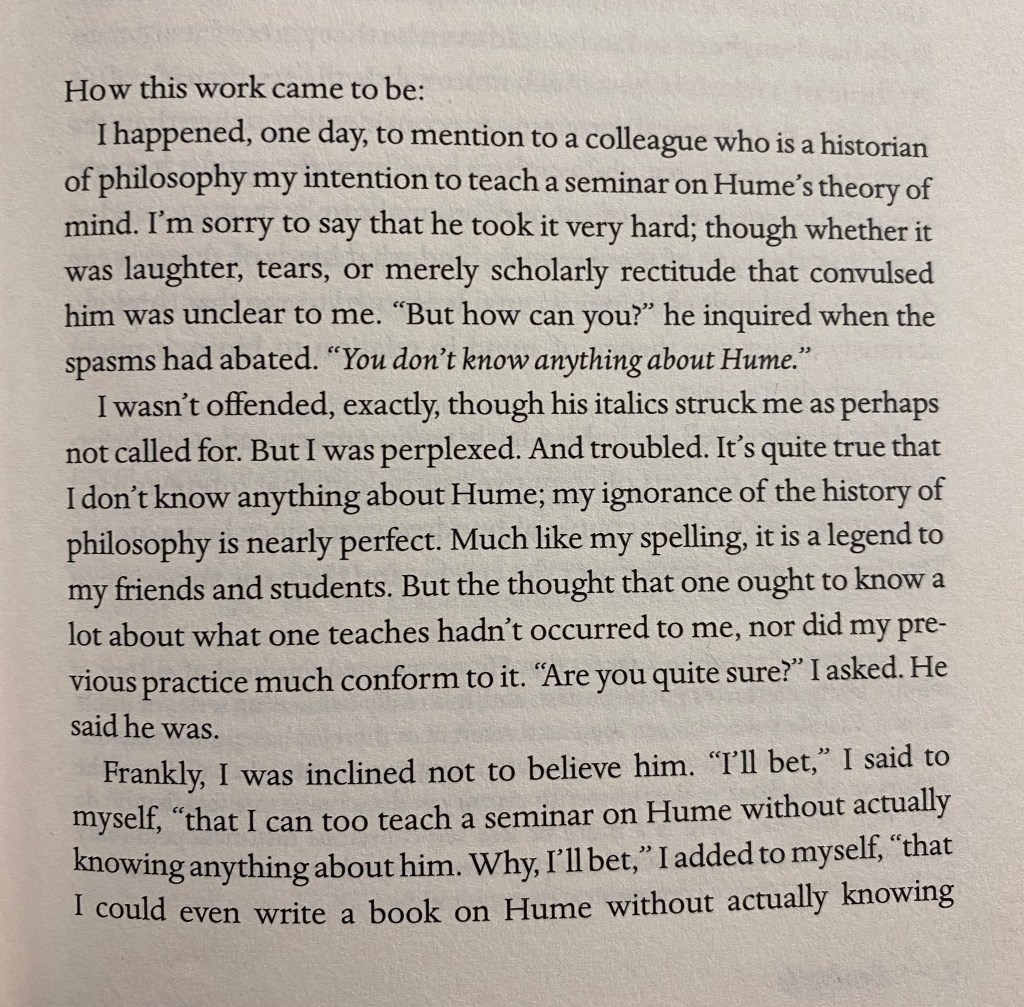
Currently, there is a piece on “the average college student” (in the U.S.) making the rounds. It’s sparking both frustrated nodding about the problems in student performance and some eye-rolling about professorial arrogance.* Although I have met a number of students from the U.S., I have taught mostly in the Netherlands and in Germany, so my more positive experience might be owing to regional differences. But I’m not entirely sure. What’s perhaps most striking about the piece is that its merciless judgements are based on, well, not much exactly. In what follows, I’ll focus on Steven Hales’ remarks on reading, point out some problems, and then make some suggestions.

Hales’ section on reading starts by pointing out that “most of our students are functionally illiterate.” This is a drastic remark. Did he do tests? We are not told, but we get something like a definition detailing that this status amounts to being “unable to read and comprehend adult novels”. How the heck does Hales know? If he has any ways of learning about his students’ reading habits, he keeps them to himself. I’m left wondering how I would figure out what my students read. Well, of course I could ask them and sometimes indeed do. Could I judge from such conversations whether they “comprehend” the texts in question. That depends: partly on my own comprehension skills and partly on what students like to disclose. I remember my first shock when coming as a postdoc to Cambridge and being told by students as well as some colleagues that they had given up reading novels because there was only so much time – and that had to be spent on professional reading. What I’m saying is that there might be reasons for changing one’s reading habits, especially in academia, and it might be quite hard to figure out what a student actually thinks about their reading for pleasure, especially in a conversation with a professor. It’s not that I don’t believe Hales that at least some students don’t do the reading; it’s that Hales’ doesn’t tell us how he knows.

I’m not saying there are no ways of knowing or at least making educated guesses at what people read and comprehend. We do that all the time. So I’m not saying you need rigorous testing or anything like it to get an idea of whether someone read something and whether their reading aligns with yours. But given the drastic type of judgment, I’d expect a modicum of information about such ways. What this lack of information leaves me with is the assumption that the conversations informing Hales’ inferences about adult novels might have been quite superficial. Talking to my 8-year-old daughter about how she feels, I often get the reply “good”. If I don’t inquire further and about particular details, I’ll be left with that. More to the point, I know from my own student life that when a professor asked me something about my private endeavours or my thoughts on a text, I could become so shy that I would respond with utter nonsense. What now? Well, perhaps Hales did have thorough attempts at conversations about Richard Powers’ novels and he just doesn’t tell us. Perhaps some of these conversations didn’t go very well. The question to ask is: why! I’m not saying that Hales’ judgment is necessarily flawed, but I would expect it to be based on something – and the mere assertion that the average student is functionally illiterate suggests that something else is lacking here.

Since I like to inquire about reading habits among students and colleagues, I know that people can be become somewhat monosyllabic when you ask them about how they read. “I just, well, read,” is the reply I get most of the time. It takes time to tease out actual expectations from a genre or assumptions about the texts at hand. So what do you do when you think your students are bad at reading?

  • First of all, ask them about it. Better still, start a conversation. To steer such conversations, it’s helpful to bear in mind that acts of reading are first and foremost defined through the interaction between readers. Reading is as much about belonging (to a certain group) and relating to styles and attitudes as it is about texts. So when it comes to conversations, the ‘text itself’ is a long way off. It’s the interaction between readers that settles important prior questions: Whether you belong to the same group, share expectations or desires or frustrations etc. Above all, it takes trust to converse about literature.
  • A second point to bear in mind is that there is often a stark difference between reading, talking about reading, and performing relatedly in class. I might read all night through but never establish a comfortable way of talking about that in a semi-professional environment. Talking in front of peers or judgmental professors is quite different from enjoying reading. So, encourage such conversations very gently.
  • Finally, what we Gen X people recognise as a reading culture does not immediately translate into the contemporary environment rich with gamification of interaction. Hales is ready to identify phones as the culprit, but that strikes me as too quick. Even if it feels very alien, we have to make an effort to find the reading culture outside of the places in which we expect it. Even social media foster reading, e.g. in the form of “BookTok”.

So on the whole, many of the problems described might be owing to expectations being at odds. Of course, some people really don’t like to read. But if you call them “illiterate” it strikes me as setting a problematic example if all you offer is your very own word for it.

______

* See also the blogs Daily Nous and Leiter Reports for extensive discussion.

Leseszenen (2): The Cat in the Hat und die Vorlesevorbilder

Wenn ich meiner Tochter Hannah vorlese, dann kommen mir oft Vorlesevorbilder in den Sinn. Das heißt, ich denke dann gleichzeitig an andere Leute, die gut vorlesen, und frage mich, wie ich da wohl abschneide. Ich bin recht reich beschenkt: Neben meiner Mutter haben mir im Laufe der Jahre auch Freunde und Freundinnen vorgelesen. Und dann gibt es da noch die Stimmen von professionellen Vorlesern (ja, meist waren das Männer), wie etwa die von Hans Paetsch, in meiner Erinnerung. Zwar versuche ich meist nicht, die Stimmen zu imitieren, aber sie helfen mir bei der Intonation und der Rollenverteilung …

„Falsch lesen! So ist das langweilig“, ruft Hannah aus. Da ich fast schon wieder selbst eingeschlafen wäre, zucke ich etwas schuldbewusst zusammen. Hannah kennt die meisten Geschichten tatsächlich im Wortlaut auswendig und verlangt regelmäßig, dass ich hier und da falsche Namen, Gegenstände oder Handlungen einfüge. „Hannah brachte alles durcheinander“, lese ich. Aber Hannah lacht nur höflich. Dass ich ihren eigenen Namen benutze, fand sie anfangs echt lustig, aber jetzt muss ich mir schon was Besseres einfallen lassen. Gleichzeitig soll ich die Geschichte auch noch aus dem Englischen übersetzen, denn ihr Patenonkel hat ihr die englische Originalversion der Katze mit Hut geschenkt. Hannah ist davon wenig beeindruckt und schlägt vor, ein anderes Buch zu versuchen „Also wieder Mamma Muh?“ Das finde ich wenigstens selbst amüsant. „Lieber Pettersson und Findus – es liegt da, unter der grünen Jacke.“ Beim Aufrichten merke ich, dass mein Fuß eingeschlafen ist; ich stolpere Richtung Jacke. „Das dauert ja ewig!“ nörgelt es mir hinterher. Hannah ist viel zu wach. Vermutlich sollte ich „die kostbare Zeit“ genießen, aber im Hinterkopf formuliere schon wieder an der E-Mail herum, die ich heute noch abschicken will. „Da ist kein Buch“, gebe ich zurück, während ich die Jacke etwas zu lange anstarre, „aber hier liegt Mamma Muh.” – „Na gut.“

„Kühe leben doch nicht in Baumhäusern!“ Während ich die Krähe intoniere, denke ich an Hans Clarins Stimme. Gleichzeitig huscht mir Der Souffleur, ein altes Lied von André Heller, durch den Hinterkopf: „Hat sich das Herz nicht irgendwo gebunden“ kräht Heller, den aus Faust zitierenden Souffleur intonierend; und in meiner Erinnerung knistert die Schallplatte dabei. – Hannah dreht sich und versetzt mir unabsichtlich einen kleinen Tritt. „Die kostbare Zeit“ tönt es mir aus allen Elternratgebern der Welt entgegen, während mich der Tritt ins richtige Lesetempo zurückruft. Ob ich mich wohl an diesen Moment erinnern und Hannah mal davon erzählen werde? In meinem Kopf herrscht eine große Kakophonie. Wieder funkt mir die E-Mail beim Sinnieren dazwischen. „Nicht einschlafen!“ – „Natürlich nicht! Möchtest Du noch was essen?“ – „Ich hab doch schon Zähne geputzt!“ – Wer hat dieses Kind bloß so gut erzogen, frage ich mich, als ich mich zum letzten Drittel der Geschichte aufraffe, die ich fast „auf Autopilot“ lesen kann. Dank Hans Clarin gelingt mir die Krähenstimme recht gut, aber ich weiß nie so richtig, wie ich die Kuh intonieren soll. Also nehme ich meine gewöhnliche Stimme und lasse sie etwas freudiger klingen. Statt des Baumhauses lasse ich die Kuh jetzt ein Flugzeug zusammenbauen, bleibe ansonsten aber beim Verlauf der Geschichte.  

Hannah beginnt langsam regelmäßig zu atmen und ihr rechtes Bein zuckt leicht zusammen. Ich lese jetzt kompletten Unsinn, aber sie beschwert sich nicht. Ich mache das Licht aus; und während die Stimmen noch sachte nachhallen, will sich die E-Mail wieder in den Vordergrund drängen. Bevor ich selbst einschlafe, fällt mir noch die Stimme meines Vaters ein, wie er mit leicht angestrengtem Ton aus einer Zeitung vorliest.

Leseszenen (1. Versuch): Wie ich zum ersten Mal „Philosophie“ las

Die Erinnerung ist amüsant. Es wird wohl das Jahr 1983 gewesen sein und ich also 13 Jahre alt, als ich mich eines langweiligen Nachmittags entschloss, in die Stadtbibliothek – oder soll ich „Stadtbücherei“ schreiben? Denn das Wort „Bibliothek“ dürfte ich damals noch nicht gekannt haben – zu gehen. Ich weiß gar nicht, warum ich hinging; vermutlich hatte mich meine Klassenlehrerin ermuntert, und ich hatte meine eifrigen Momente, wenn mir langweilig war. Ich ging also los und heute habe ich keine Idee mehr, wie das war, aber ich muss mich furchtbar gelangweilt haben. Auch der Weg war langweilig, langweilig und grau, grau, grau – und bestimmt hat es auch genieselt. Meine Erinnerung schwenkt aber immer sofort in die Bücherei, eines der ehrwürdigsten Gebäude der Stadt – jetzt ist natürlich eine Kneipe drin –, und ich sehe die langen Gänge mit den dicken und nicht ganz so dicken, aber wohlgeordneten Büchern genau vor mir.

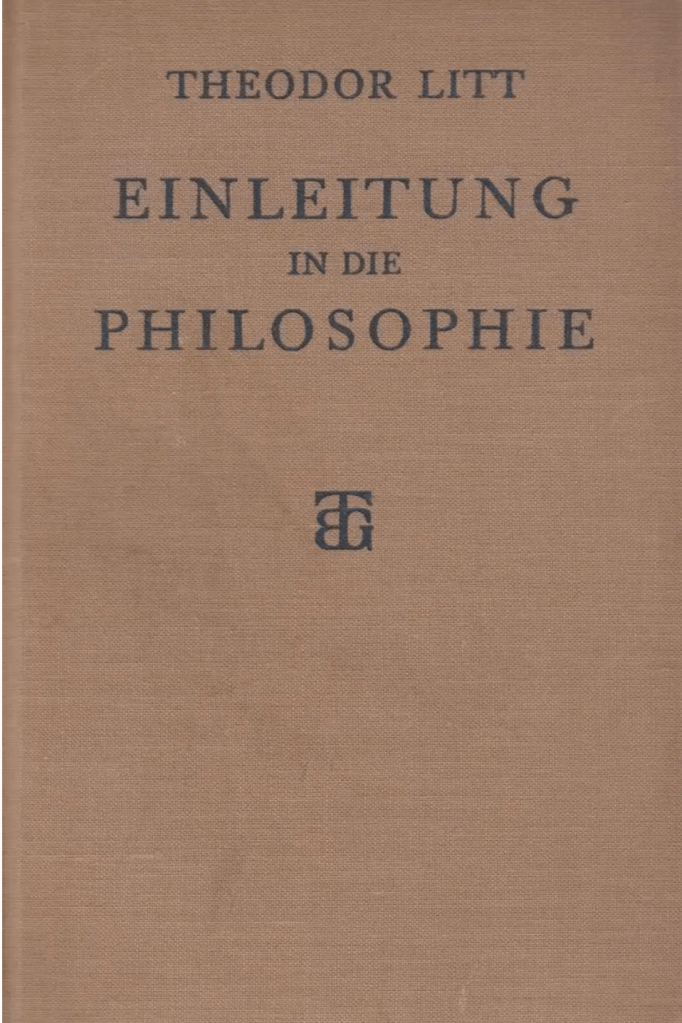
Da war es, Buchstabe P, Philosophie! Das Wort verstand ich nicht, aber ich kannte es oder erkannte es wieder, denn ich hatte es in einem Interview eines Magazins gelesen. Da ging es um einen Musiker, der etwas „Philosophisches“ gesagt haben sollte. Ich fand den Musiker gut, also wollte ich jetzt wissen, was Philosophie ist. Meine Eltern kannten sich da auch nicht aus, aber die kannten sich sowieso mit nichts aus, außer mit Arbeiten gehen, jeden Tag, und immer ganz früh aufstehen. Jedenfalls ging ich jetzt in die Abteilung „Philosophie“ und schaute die Buchrücken entlang. Ja, ich konnte zwar lesen, schon lange, aber ich verstand dennoch nichts oder fast nichts. Gleichwohl – „gleichwohl“ hätte ich mit Dreizehn nicht mal buchstabieren können – gleichwohl also, gleichwohl fand ich die braunen und roten Buchrücken mit den silberfarbenen oder schwarzen Buchstaben sehr beeindruckend. Bücher können staubig aussehen, auch wenn gar kein Staub darauf zu sehen ist. Schließlich griff ich ein Buch heraus und las ehrfürchtig: Theodor – wer heißt denn so? – Theodor Litt: Einleitung in die Philosophie. Aha. Das war doch was. Ich schlug es gleich in der Mitte auf: „Zur Reflexion zweiten Grades“ stand da als Überschrift – kursiv, also musste es wichtig sein. Ich erinnere mich vage, was ich dachte, etwa so was: Reflexion – das ist sowas wie Nachdenken. Also Nachdenken über das Denken?

Hm, das klang interessant, also rätselhaft. Was das wohl heißen sollte? Naja, ermutigt durch den Griff zum Buch, aber immer noch ein bisschen gelangweilt, drehte ich mich um.

Die Bücher hinter meinem Rücken waren rot, größer und sahen schöner aus. Eine Gesamtausgabe: Sigmund Freud, den Namen hatte ich schon gehört. Ah, die Traumdeutung, das klang fast vertraut. – Schlecht sortierte Bibliothek, denkt ihr? Nein, aber hinter mir fing (für mich damals unbemerkt) schon die Abteilung Psychologie an. – Ich blätterte: Äußere Reizquellen (für Träume), las ich. Ich versuchte mir das zu erklären. Ja, wenn morgens der Wecker klingelt und ich weiterschlafend von einem Wecker träume, das muss eine äußere Reizquelle sein. Jetzt war ich mächtig stolz auf mich. Ich hatte was verstanden. Aber die Traumdeutung war mir definitiv zu dick, als Buch. Ich musste ja den ganzen Weg nach Hause laufen. Also zog ich ein anderes Buch raus. „Zwang, Paranoia und Perversion“ stand da drauf. Ich wusste nicht, was Paranoia ist, aber das Buch war nicht so schwer zu tragen und die anderen Wörter hatte ich schon mal gehört.

Das klang interessant. Ich war jetzt interessant, mit dem Buch unterm Arm. Ich nahm das Buch also mit und machte mich stolz und ein bisschen verwandelt auf den Heimweg.       

_____

Die Leseszenen sind ein Versuch, über verschiedene Leseerfahrungen zu schreiben – zur Vorbereitungs des im letzten Post genannten Leseprojekts mit Irmtraud Hnilica.

On autosociobiography and Tracey Thorn as a philosopher

Where do I begin? I’m getting into a new genre, fairly new at least for me: autosociobigraphy. While the term seems to have been coined by Annie Ernaux (see here for a volume on the genre), this kind of autobiography is perhaps not entirely new: As I understand it, it is an autobiography that does not merely give an account of one’s own life, but also presents it as a sociological or political analysis.* So this genre doesn’t just add a bit of reflection. Rather, it seems to be designed as an approach to (social) reality through a first-person narrative. Of course, sociology is not the only discipline in which this kind of approach is a clear enrichment. But although we also see autobiographies of philosophers and receive them as philosophical works, the potential of this genre leaves much space to be explored.** So, how about an autophilobiography? After all, a decidedly personal approach opens up the possibility to give pride of place to experience – a concept much cherished but also often banned for a supposed lack of universality. A fairly recent attempt at an autobiographical approach to philosophy I can recommend is Michael Hampe’s What for? A philosophy of purposelessness (Wozu? Eine Philosophie der Zwecklosigkeit). Reading this made me think that this is what I, among other things, want: If you are a more regular reader, you’ll know that I attempt to use a decidedly personal perspective now and then to make a point (a perhaps obvious piece is the one on the phenomenology of writing). Yet, once we allow that the autobiographical approach doesn’t have to be implemented in an entire book, we can see that there are a lot of reflections that are worthwhile bits of philosophy in this sense. Let me give just one example:

Being interested in the history of music in the 20th century in particular, I swallowed Tracey Thorn’s Bedsit Disco Queen where she describes the music scene of her early years before Everything But The Girl was formed in Hull, England. This as well as her more recent Another Planet can certainly count as autosociobiographies. While Thorn is a great singer and writer, I was equally taken by her reflections on singing in her essay collection Naked at the Albert Hall. Reading her account of singing inspired me to reconsider Spinoza’s philosophy of mind and particularly his account of philosophical therapy (I just finished a paper draft involving Thorn and Spinoza).  I think that Thorn, while describing her way into singing, is really expressing a kind of reflection that Spinoza would deem an approach to philosophical therapy in the sense of re-ordering ideas about what matters. Let me just quote from her first essay in Naked at the Albert Hall:

“When did you know you could sing? people ask me. How did you even start? Where does your voice come from, is it from inside your head or inside your body? … I’ve written before that it was a disappointment to me when I realised I wouldn’t be Patti Smith, but that was a little way off in the future when I first heard her in 1979. … My first reaction to Patti Smith was one of possibility. I wanted to be her because a) on the cover of the record she looked like a boy, and I felt that I pretty much looked like a boy, and she made looking like a boy a beautiful thing; and b) the first time I tried to sing along with those opening lines on Horses, I realised in fact that I could sound like her. … Low, dark boyish, it existed in a space that seemed familiar, and contained the echoes of the sound I was tentatively exploring in the privacy of my bedroom. Joining in with her I found that we did indeed occupy the same ground, and without knowing how or why I had an immediate sense of my voice ‘fitting’. Imagining this to be a conceptual ‘fit’, I of course believed that I sounded a bit like Patti Smith because we were alike, it was a metaphysical connection being made. And in doing so I fell into the first and most basic misconception about vocal influence – the idea that it transcends the physical. Now I believe that the reason she implanted herself into my imagination as my first vocal influence was the simple accident of vocal range … My perfect, ideal range. Still the place I most like to sing. … Almost the entire Horses album is pitched perfectly for me … Joining in with Patti on these songs was a joyous experience, utterly secret … The basic physical coincidence of our vocal ranges connected us not just ideologically, but physiologically. … The lungs propel air, which passes through the vocal chords, making them vibrate and producing the sound we use for either speaking or singing. But unlike any other instrument, these components are your own actual body parts, and the sound you make is both defined and limited by your anatomy. As an instrumentalist you might practice and adapt your technique in order to follow the style and sound of players you like … But as a singer there is only so much you can ever do to adapt the sound of your voice to emulate singers. We label as inspirational those whose sound lives somewhere close to our own …” (Thorn 2015, 3-6)

There is a lot in these observations. A couple of years ago, I took her observations as an anchor to think about active forms of listening to music. But now I think this goes deeper and exemplifies how we re-evaluate experiences and thus change (narratives about) ourselves. Apart from the aspiration and attraction depicted, it is clear that the author, Thorn, takes her body to be in agreement with that of Patti Smith, at least as far as the conditions for singing are concerned, and that that agreement is physiological. At the same time, the author realises that this agreement is easily confused with one of personality. But what she is describing is a common concept of her physiologically determined vocal range in agreement with that of Patti Smith. In Spinoza’s terms, Thorn, getting this more distinct concept of her physiological likenesses with Patti Smith, is revealing an agreement in nature. Arguably, while the initial exposure to Smith’s voice in 1979 is a confused attraction, the account Thorn gives in 2015 is a therapeutic disentanglement of the initially confused concept, distinguishing the external or distal cause, Smith’s voice, from the internal or proximate cause, her own voice, and the resonance between them, i.e. the agreement.

(An early attempt at scribbling down Tracey Thorn’s account as it relates to Spinoza’s Ethics)

____

* Dirk Koppelberg kindly corrected me on FB and offered the following charactrisation: “As I read Annie Ernaux, she does not “also” present a sociological or political analysis of her life but delivers an aesthetically arranged and composed description of it that illuminates certain sociological and political determinants of her life. This kind of writing seems to me an aesthetically challenging alternative to a sociological and political analysis in the strict sense.”

** The autosociobiographical approach will also figure in a project on reading as a social practice that I’m currently planning together with Irmtraud Hnilica. Stay tuned for updates on this project soonish.

Does reading involve texts? Reading as a reciprocal process between readers

It goes without saying that the title question is a bit of a provocation. Nevertheless, the point I want to make is that reading is first and foremost an interaction between readers and the ‘text itself’ comes second. It’s not just one of those weird hear-me-out appeals. Rather, I think that this insight should have repercussions on our practice of teaching and, perhaps, of reading.

Early Beginnings

Come to think of it, before you even learned to read, you probably have been read to! Be it by your parents or by mischievous siblings. At least I remember that, before I ever set eyes on a text myself, my mother used to read fairy tales to me, hoping I’d fall asleep. So my first encounters of reading were actually interactions, not so much with the text, but with the special reading voice of my mother. A reciprocal interaction: My mother would read; I would listen. My mother would stop; I would plead. Tell me, gentle reader, is my listening already a form of reading? I’m not sure. – Anyway. Likewise, learning to read at school involved first and foremost interactions with the teacher and the class. Here, however, the reciprocity would become slightly asymmetrical: I would not just try to make sense of the letters on the blackboard; I would be judged on my performance. I don’t remember much of it, but I still feel the excitement of internally gliding along with my inner voice trying to remember the alphabet correctly: A, B, C, D, E, F, G … H? I don’t actually remember whether we also had to learn to write the letters when learning to read them, but it feels like it must have been a related process. In any case, reading is taught through an interaction between teachers and pupils (and asymmetrically so), when actual texts are still a long way away.

Tacit Agreements in Reading

Let’s slowly move on to my claim then. My thesis is that at least a crucial part of reading consists in partly tacit and partly explicit interactions between readers. Why would this be so, though? Doesn’t reading mainly consist in grabbing a text and reading it? Well, before you actually pick up a text, you’ll be fed with assumptions about the genre. So you’ll know what to expect before you set eyes on the actual page or screen. If you enter a restaurant, for instance, the items on the menu won’t come across as strange poetry. Conversely, if you picked up a book from a poetry section, you wouldn’t take the text to offer a menu, even if there was talk of pizza and pasta on the page. And if you enter a philosophy class, you’ll of course expect to be offered philosophical texts. In any case, the habitually familiar settings already stir tacit expectations about the texts in question. I consider such settings tacit agreements between the reader and the provider of texts.  If you enter a restaurant, you’ll expect a menu. If you enter a literature course, you’ll expect a literary text (or at least one dealing with literature). Questions (mostly on genre) will be raised if these expectations are frustrated. At this point, the crucial stages of interaction are about seeing whether expectations of genre are met or frustrated.

The Topic of Texts

Philosophical and certain literarary texts often thrive on a certain openness or even ambiguities. Unlike manuals or menus their understanding is not exhausted by being able to act on their content; that is, to build the shelves or order the soup successfully. This means that it’s often an open question what’s going on or what the text is actually about. Deciding on the precise topic of a passage or paper or book is thus often a matter of debate. This can even be true of your very own texts. (Agnes Callard once gave a nice example of her book as an Ugly Duckling by reporting on how she started out thinking it was on the weakness of will when it later turned out that she was really talking about aspiration.) So even if we’re clear about the genre of a text, we might remain unsure about its topic. In such situations, we might recommend all sorts of scholarly remedies: such as looking into the text in question, comparing it with other texts or some such straightforward means. However, what I think is really doing a great part of the work is the interaction with other readers. This doesn’t mean that the text plays no part in it. But the attempts at settling the topic will crucially involve an attempt to reach agreement with other readers, be they alive or part of a tradition of reading texts in a certain way.

The Triangulation Thesis

This idea has its roots in Donald Davidson’s so-called triangulation argument: Understanding linguistic utterances or the beliefs of my interlocutor involves not just understanding what object these utterances are about. Rather I need to interact with my interlocutor to fix the object in question in the first place. Jeff Malpas puts this point as follows:

“Identifying the content of attitudes is a matter of identifying the objects of those attitudes, and, in the most basic cases, the objects of attitudes are identical with the causes of those same attitudes (as the cause of my belief that there is a bird outside my window is the bird outside my window). Identifying beliefs involves a process analogous to that of ‘triangulation’ (as employed in topographical surveying and in the fixing of location) whereby the position of an object (or some location or topographical feature) is determined by taking a line from each of two already known locations to the object in question – the intersection of the lines fixes the position of the object … Similarly, the objects of propositional attitudes are fixed by looking to find objects that are the common causes, and so the common objects, of the attitudes of two or more speakers who can observe and respond to one another’s behaviour.” (Italics mine)  

So while the object or Ding an sich is elusive, it’s being fixed in the interaction with the other. Similarly, I think that the topic of a text is elusive. Determining it requires triangulation with other readers. Once we admit that, we’ll see that becoming clear about our interlocutor’s assumptions and authorities as well as their relation to our own take on the text is a crucial element in reading.

***

Part of this idea has been presented at an interdisciplinary workshop on “Reziprozität” at the FernUniversität in Hagen. I’d like to thank Dorett Funcke for inviting me to present my musings at this occasion. Special thanks to Christian Grabau, Irina Gradinari, Irmtraud Hnilica, Tanja Moll, and Marija Weste for further discussions of this idea.

Dauerstellen? Department? Tenure-Track? Podiumsdiskussion zur Fakultätsstruktur (Video)

In Öffentlichkeit und Politik wird immer häufiger über dauerhafte Karriere- und Beschäftigungsperspektiven jenseits der Professur diskutiert. Erste Universitäten haben diesen Diskurs aufgegriffen und bereits Dauerstellenkonzepte entwickelt, die neue Wege aufzeigen und die prekäre Situation von Wissenschaftler*innen verbessern. Welche Strukturen werden erprobt, welche Überlegungen stehen dahinter und welche Herausforderungen stellen sich bei der Umsetzung? Darüber hat sich die Fakultät für Kultur- und Sozialwissenschaften der FernUniversität in Hagen im Rahmen der Wissenschaftsgespräche ausgetauscht. Denn auch unsere Fakultät hat sich dazu entschlossen, entsprechende Konzepte zu entwickeln. Zu einer Podiumsdiskussion hat die Fakultät daher interne und externe Gäste eingeladen, die von Best-Practice-Beispielen und ihren Erfahrungen berichten: Prof. Dr. Thomas Bedorf, Dr. Roland Bloch, Prof. Dr. Martin Lenz, Prof. Dr. Tobias Rosefeldt und Prof. Dr. Julia Schütz. Moderation: Dr. Patrick Heiser

Link zum Video

A rough but workable guide to plan an essay

I keep noticing that one of the greatest worries of students is finding a workable research question for their essays – one that allows them to structure their work and keeps them in line with what they intend to promise. I’ve written on this before at length on this blog (here, a Groningen student reviews three of my posts), but I think I managed to break down the issue even more. – I’ve just finished an exciting three-day seminar on “Spinoza’s Ethics. An introduction to doing philosophy systematically for beginners.” The idea was to bring out the systematicity of the Ethics to such a degree that students could continue working with the text independently without loosing grip of the general framework. On the last day, I wanted to turn the tables and have my roughly fourty students work, not primarily through the text, but through potential essays on this book. Hence, I divided them into six groups and gave them pertinent tasks. In a feedback round, most students and I agreed that this was a surprising success. Therefore, I simply want to share the set-up of the tasks:

At the beginning, I asked the students to:

  • find some friction (in the text),
  • provide concrete evidence for this friction by providing at least two passages or sentences from the text,
  • provide a motivation of why the friction arises,
  • provide at least one possible answer as to how to state the friction and how to amend it.

By asking for a friction, I could rule out explorative works that have no natural boundaries and can keep students on the preparatory reading path forwever. By asking for concrete passages of text, students will have a constant fall-back place when themes would have them meander into the wilderness of the space of reasons. By asking for friction in the text, I also wanted to make sure that the friction arises from an immanent reading, rather than from an external criticism (e.g. of the sort: I don’t like this kind of philosophy, so here is why I prefer something else – which doesn’t really engage with the material). This approach mostly yields ambiguous uses / understandings of particular terms. Not everyone is interested in that kind of focus, but the promise is that this provides a workable way in and out, while one still has time to draw in all the pertinent aspects related to working through the friction.

Eventually, the student groups came up with six workable research questions. The evidence and motivations made for a pertinent structure, the possible answer for a fairly clear hypothesis. In the discussion of these approaches, we then tried to establish what the chapters / sections should look like: i.e. how they should implement the friction, motivation, and the answers. (In fact, this idea for planning essays is derived from my account of questions.)

Especially for beginners, it’s also important to counter the feeling that they don’t yet know enough to come up with a proper question. I addressed this worry by making clear that any philosophical thesis can (and indeed will be) countered at some point. So one shouldn’t waste their time by trying to immunise their work against criticism. Whatever you’ll say can be criticised. So you might as well get started immediately.

Of course, this is not waterproof. But my sense was that students now had an idea about how to move from reading to planning their writing – and that’s all I want.

***

Many thanks again to my great students in this course!

Paraphrases as validations. Or how using your own words (tacitly) carries interpretations  

A: Marriage is a speech act.

B: Why do you devalue traditional rituals?

A: I don’t! I just made a point about the constitutive role of language for marriage.

B: Oh, but why did you say that marriage was nothing but talk?

It’s common to paraphrase texts, whether written or uttered, with our own words. In fact, students are often encouraged to “use their own words” when asked to restate or summarise an argument. Such instructions are usually intended to allow for checking whether something has been understood correctly or for translating technical terms into common language. The misunderstanding in the example above can serve as an illustration: While A made a point about the act or marrying requiring the people getting married to actually say “yes”, B took A to mean that marriage reduces to talk and is thus devoid of any further value. So B took A’s utterance in a reductive sense, while A meant it in a constitutive sense. These different senses are brought out in the paraphrases. B specifies to have taken the initial sentence in the sense of “nothing but”; A clarifies to have meant “the constitutive role”. Paraphrases are ubiquitous and yet very difficult to master, at least in philosophical contexts. Attempting to outline a simple doctrine often forces me to re-write for hours on end. But what precisely is it that makes paraphrasing so difficult? As the little example shows different paraphrases can already come with different interpretations, which in turn entail different evaluations.

In what follows, I hope to gesture at an answer that shows how paraphrases (tacitly) depend on interpretations and thus also determine evaluations of the paraphrased positions. What’s more: I hope to give a reason for dispelling the common myth that you can present a position without already being committed to an evaluation. I’ll close with some thoughts about how paraphrases also validate the paraphrased thoughts.

Problems with paraphrases in philosophy

While exercises of paraphrasing might be “basic tasks”, they are generally highly contentious and often even lie at the core of academic disputes. On the one hand, paraphrases can be historically problematic in that they introduce ideas unheard of at the time of the original expression; on the other hand, paraphrases can be systematically problematic in that they introduce unwanted (metaphysical) commitments. Historically speaking, the early modern use of the term “man” commonly has a wider scope (including women) than the twentieth-century use that renders it identical to the expression “male human (being)”. At the same time, this etymology is complicated by the fact that the pre-twentieth-century use of “man” is often tacitly referring to human males as the standard. Thus, depending on the context, the paraphrase of “man” with the term “human being” might count as anachronistic, although it is etymologically apt. Metaphysically speaking, we might wonder whether the expression “the present King of France” commits us to non-existent objects. Whichever side you take on such matters, a crucial function of the paraphrase lies in directing the attention or focus of the interlocutor. Thus, it clearly affects the philosophical approach to a given thought or content and also the direction a conversation about it might take. Hence, the worry arises whether different paraphases tacitly commit interlocutors to contrary interpretations. Arguably, such worries are rooted in a holistic understanding of sentence meaning. Assuming that the meaning of a given sentence is not atomistcally determined, but by a set of other sentences that the given sentence is related to, I will worry whether get the implications right. Going back to the initial example, speakers A and B construe the meaning of the initial sentence via different sets of related sentences or implications.

This kind of problem becomes clearly palpable in teaching contexts. A helpful example is Anselm of Canterbury’s Proslogion. Confronted with the phrase “something than which a greater cannot be thought” (aliquid quo nihil maius cogitari possit), many students begin by asking whether that renders God’s greatness subjective. Given the phrasing in Anselm, this question reveals a certain kind of modern understanding of the term “thinking”. Reading “… cannot be thought”, they render “thought” as an activity that they (or even an ideal thinker) can perform and thus as the individual mental act of a subject. This reading drastically changes when students are exposed to an understanding of “than which a greater cannot be thought” as “greatest possible”, such that it can be seen as a metaphysical modality rather than a subjective act. Again, it’s paraphrases, both tacit and explicit ones, that bring out different commitments. Thus, the seemingly simple task of “saying the same thing in your own words” requires a careful interpretation of the phrase that is to be paraphrased. As I see it, then, giving a paraphrase depends on a specific interpretation of the initial phrase. Where does this leave us?  

The interpretation-ladenness of paraphrases

If our paraphrases are guided by specific interpretations, then this means that there is no such thing as a neutral report or presentation of a position. If I present Anselm’s formula in my own words and mistakenly say, for instance, “God is the greatest being, according to Anselm” (as opposed to “God is the greatest possible being”), then I’ll be mistakenly implying that God is the actually greatest thing (and something greater could be thought). However, most problematic paraphrases are not owing to such obvious blunders. Rather, they can depend on quite nuanced understandings. Now, my point is not that there are problematic interpretations; my point is rather that the paraphrase we choose commits us to a limited set of possible interpretations (as opposed to a different set of possible interpretations owing to a different paraphrase) and that there are no paraphrases that come without implications (and thus specific interpretations contrary to others). If this is correct, then there is no innocent or neutral paraphrase of a given expression. This, in turn, allows us to rid ourselves of a persistent myth: the myth that one could paraphrase a position and only then decide what to make of it. This myth often translates into a common thesis or essay structure, suggesting that you can structure your work by first presenting a position neutrally and only then evaluating it. This is impossible because the paraphrase already commits you to a specific interpretation – whether you know it or not.

The validating nature of paraphrases

But why, you might ask, is this so? Why can’t I simply paraphrase a position neutrally, leaving it open for various possible commitments? I have to admit that I have attempted this for a long time. But it doesn’t seem to work. The reason is that paraphrasing is a strangely bi-directional activity. On the one hand, a paraphrase is a bit like an (indirect) quotation, trying to convey what someone (else) has said. (Of course, we also continuously paraphrase our own expressions.) On the other hand, a paraphrase is like an appropriation, trying to convey what you have understood. These two aspirations can come apart, of course, both in historical and current readings. But what is even more important is that the appropriation often carries with it a sort of validation. In trying to appropriate someone’s form of words, I validate what has been said – by embedding it into my own thoughts. In fact, we often present and paraphrase claims that we take to be commonly accepted without specific references to any particular author. People now constantly say that mariage is a speech act, without particular reference to Austin or a theory of performative utterances. This thought has become part of a fairly common way of thinking about the role of language. Its ubiquitous paraphrases have made it part of the public domain, as it were. This way the initial thought gets validated in various formulations.

To see this, it’s vital to realise just how ubiquitous paraphrases are. In fact, most of the things we say are paraphrases of others’ words. In fact, we learn to speak and practise our daily interactions by constantly saying, in slight variations and paraphrases, what we hear and read others say. And since it often doesn’t matter who precisely said what, the exact authorship of the paraphrased sentences fades – until we fully embrace the thoughts ourselves and think we are original.   

So paraphrasing is a continuous and indeed necessary activity we practise in our daily lives, often used to validate thoughts in new contexts. This feature of validation, I submit, carries over when we, as philosophers, present the position of someone else. To what precise extent remains to be seen. But it’s clear that the concomitant validation plays a crucial role in the way we learn and pick up thoughts both in daily interactions and as philosophers who appropriate thoughts of others into our understanding of the world and the claims of current or past interlocutors.

An afterthought:

If this is remotely correct, using ChatGPT or other tools for paraphrases (instead of learning and constantly practising the validation of thoughts ourselves) might have highly problematic consequences for our (linguistic) interactions with others and indeed ourselves.

ESEMP CfA: Why and How Do We Study Early Modern Philosophy Today?

Call for Abstracts

The European Society for Early Modern Philosophy (ESEMP) invites submissions of abstracts for presentation at the 7th international conference of the ESEMP:

Why and How Do We Study Early Modern Philosophy Today?

25-27 September 2025

FernUniversität in Hagen, Germany

Keynote Speakers: Mogens Lærke (CNRS) and Anik Waldow (University of Sydney)

The aim of this conference is to bring together leading experts and young talented scholars from all over the world to explore ways of approaching early modern philosophy and reflect anew on the aims of doing so. While all papers on the period are welcome, talks highlighting the respective aims or methods of studying EMP are particularly encouraged.

Following recent discussions in the field, we might wonder, for instance, whether we should favour historical over so-called rational reconstructions of texts or what precise aims are served by extending the canon. Likewise, we might ask how advances in the digital humanities shape our field. Even if one works in more traditional ways, one might inquire whether common assumptions about how to place and study texts, figures or debates still stand. This does not mean that papers should focus on these issues alone; rather it is an invitation to reflect on the aims or methods guiding the study at hand.

A second focus of our conference concerns (practical) issues concerning especially early career researchers. In this spirit, the conference includes a mentoring programme intended to connect mentees with experienced researchers who will provide advice on papers.

Submissions

We invite submissions of abstracts for papers addressing all aspects of early modern philosophy. To submit, please email an abstract – between 500-700 words and anonymised for blind review – to Tanja Moll (tanja.moll@fernuni-hagen.de). Please use ‘ESEMP 2025 abstract’ as the header of your email. The email should contain the author’s details (name, position, affiliation, contact details). The mail and the abstract should contain three keywords to which the abstract relates (indicating theme, author, and method / aim highlighted, if applicable). Please use the PDF format for submission and prepare the text of the abstract for blind refereeing.

If you would like to take advantage of the mentoring programme, please say so in your mail. If you would like to act as a mentor, please also indicate this in your mail. We will try to match mentors and mentees in relation to the keywords provided in the mail.

Please direct any questions you might have to Martin Lenz: martin.lenz@fernuni-hagen.de

Procedure

The deadline for abstract submission is 15 January 2025.

Papers will be selected by the board of the ESEMP.

Notifications of acceptance will be made by 28 February 2025.

For each talk, there will be time for a 30-minute presentation, with about another 15 minutes for discussion. All accepted papers will be eligible in case of the publication of the proceedings.

Upon acceptance

We do not request that you pay a fee, but membership of the ESEMP is compulsory to present a paper at the conference. (Annual membership fee: 30 EUR; reduced annual membership fee: 15 EUR).

To become a member of the ESEMP, please use our application form or contact the Treasurer of the ESEMP: hubertus.busche@fernuni-hagen.de