The incorrigibility of ChatGPT and the end of teaching

Suppose you witness an accident and have to report it to the police. “Well, the red car drove with high speed towards me and then took a sharp left turn”, you exclaim. You try hard to find the right words to capture the precise sequence of events and people you’ve noticed. Being a bit fussy by nature, you keep correcting yourself. “To begin with, it seemed as if the driver wanted to run me over.”, is the formulation you eventually settle on. – Now imagine you try to refine your impressions using ChatGPT. Obviously, there is always room for improving on style and grammar. But can you expect ChatGPT (or any LLMs or AI) to improve on the accuracy of your factual statements? No. But what does it mean if it is used to that end anyway?

Given the way ChatGPT works, it has no experience of the world in any sense. Rather, it generates sentences by predicting the most likely sequence of words based on the input it receives and the vast amount of text it was trained on. Thus, it cannot improve on the content of any statements relying on experience. While this is no surprise, the repercussions it has for teaching contexts deserve careful attention because such contexts thrive on the correction of statements. Especially now that people not only use this device to hide their plagiarisms, but also to “decide” all sorts of questions. I’ve been wondering repeatedly what precisely it is that goes wrong in teaching contexts with the use of AI and now I begin to think that it comes down to a loss of corrigibility, a loss of understanding what corrigibility even means. Put in a nutshell, seeing that this device improves the form of (written) texts in amazing dimensions, it makes us blind to the fact that it impoverishes our relation to empirical content. In what follows, I’d like to explore this loss with regard to teaching philosophy.  

What is corrigibility? Corrigibilty means that a statement or text can be corrected. If I state that it’s raining you can correct me by pointing out that it’s in fact not raining. We offer and receive corrections all the time. We improve the way of phrasing something we’ve seen by finding more adequate phrases. We can differentiate between grammatical and stylistical corrections as corrections of form as opposed to content, but often the two are difficult to keep apart. The phrase “it’s raining” is formally correct when used among English language speakers, but what makes it correct for these users is how it’s applied to a shared experience of the world (in which it happens to rain). If I ask you to refine your phrasing, suggesting for instance that it’s really pouring and not just raining, I can mean at once to pay attention to your experience and the conventional way of expressing such an experience in the English language. When you think about your experience and modes of expression, you’ll likely involve linguistic sources (your language conventions, literature, the sociolect your audience is supposedly expecting etc.) as well as non-linguistic sources (whatever you can gather from other sense-modalities). Most importantly, you’ll involve relations of applying linguistic resources to non-linguistic experiences. In other words, we relate linguistic conventions to (non-linguistic) facts. ChatGPT, by contrast, doesn’t do that. Having no relation to the world, it is confined to linguistic resources; it has no other sense modalities and it has no way of relating linguistic to non-linguistic facts. In other words, while it can improve on formulations, it cannot be corrected. Put in Wittgensteinian terms, whatever seems correct to ChatGPT is correct – and that means that there is no sense of distinguishing between correct and incorrect. (There is an intriguing piece about learning this the hard way.) Thus, we shouldn’t even say that it’s “hallucinating” when it’s “making things up”. There is no meaningful distinction for this device between hallucinating and getting things right in the first place.

Now I doubt that I’m spreading any news here. So why is this worth saying? Because both the language of ChatGPT and of the merchants of this technology constantly suggests that this device is learning, being corrected and improved. Yes, it’s being improved at what it does already, but it’s not improved in any other sense. This lingo tricks many of us into thinking that the improvement is of the kind that we are familiar with. Just like AI is now increasingly taken to be a meaningful, sexy or caring interlocutor, it tricks many of us into assuming that it could “learn” by being “corrected”. But learning, for humans, always involves a relation to the world. The great confusion about ChatGPT, then, is that it would be improved in any way that we would try to improve our own way of expressing ourselves.

How does this affect teaching (philosophy)? There are many pieces about the decline of the humanities in the face of ChatGPT and related devices. Given how this technology diffuses our sense of authorship and our reading culture, I’m inclined to think that our whole way of cherishing text production and reading will go out of fashion and become a nerdy niche. Just like long electric guitar solos or keyboard solos, which seemingly were ubiquitous in the 70s and 80s, are now a thing for a few nerds on youtube. So as I see it, the problem is not that students are faking texts; the problem is that most texts are considered irrelevant. Along with the skills and features that go into their production. Being able to write good texts is already irrelevant in world where so-called leaders get by without even glancing at their briefings. But let’s stick to the current story. My hunch is that the loss of corrigibility ingrained in ChatGPT is the outcome of a larger trend that was clearly recognised in Harry Frankfurt’s On Bullshit as early as 1986: Once you realise that you can convince without sticking to techniques of truth-evaluation, you can disregard truth altogether. After all, the question is not in what way ChatGPT is incorrigible. We can figure that out quickly. The question is why are we letting ourselves be corrected by a device that is incorrigible.

But that’s a question for nerds. Mastering long written texts, let alone writing them, then, doesn’t seem to hold much of a promise for anything now. This is not just because students have incentives to fake their work; it’s because there are hardly any incentives to produce such work in the first place. Why do you need to learn to play the piano if you have keyboards with automatic accompaniment? Of course, you might get sick of their sounds quickly. But who cares if that’s all that’s on offer?
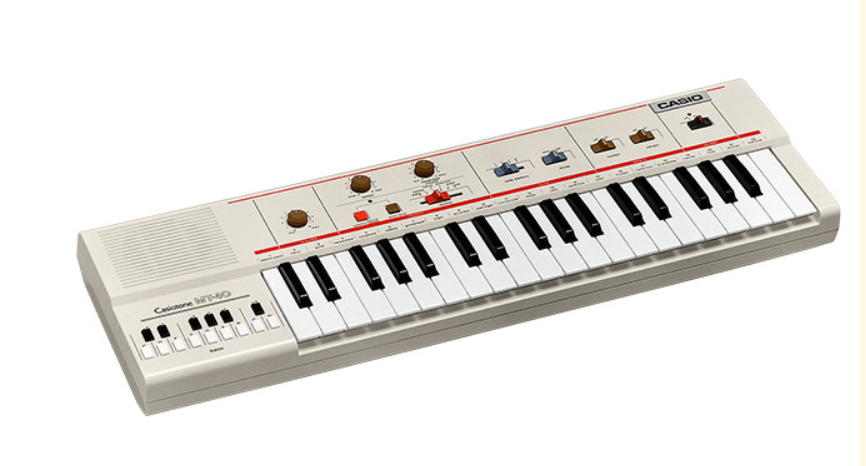
So again: the problem is not cheating; it’s irrelevance. Writing this, I feel like a fossil decrying the loss of its natural habitat. And that’s probably what it is: An old man whining that no one recognises the beauties hidden in the art he cherishes. So what? So what indeed?

So what’s left for teachers? If you don’t worry too much about plagiarized texts, you might adjust your energy towards getting people to think, not by by analysing texts, but by coming up with good prompts for ChatGPT or by enhancing your techniques of video editing. In other words, while certain products (such as well-written essays) will simply be done by ChatGPT in the future, you can support students in improving “their” work by focussing on helping them to use this and the AI devices to come as a good tool. The remaining question is, though, what this tool is good for, once we admit that writing texts is irrelevant?
What does it say? The supposed objectivity of written texts

“… interpretation is the source of texts, facts, authors, and intentions.”

Stanley Fish, Is There a Text in This Class?

Do you remember when you first committed some of your own thoughts to paper? Perhaps you kept a diary, perhaps you wrote poems or lyrics or crafted a letter to a friend. Perhaps you had worked on the aesthetics of your handwriting. Anyway, there it was. Something that you had written could now be read and, of course, misread in a distant place during your absence. This striking distance became even more evident to me when I had seen my words, not in my clumsy handwriting, but in the typeface of a word-processor. Imagining that someone would read my words not as my personal scribblings but as a text in an authoritative typeface, made me at once proud but also seemed to diminish my personal impact on the text. In any case, the absence or possible absence of the author from something written, I suppose, is what turns texts into something objective. As I see it, texts become objective when they can be read independently of the writer, of what the writer says and thinks. If this is correct, it seems that written texts are fundamentally different from spoken texts or thoughts. In turn, this makes me wonder whether it’s written texts alone that afford the interpretive openness allowing for different readings or interpretations as we know them in the humanities of our time. In what follows, I would like pursue some perhaps naïve musings on this issue.

Thinking versus speaking versus thought?

If you observe what you say in contrast to how you write, you’ll probably notice a stark difference between spoken versus written language. While academics sometimes seem to try and imitate the grammatical standards of their written language in their speech, we quickly notice that the grammatical rules, word choices and other aspects are vastly different. Pondering on this issue quickly brought me back to the ancient and medieval doctrine of “three kinds of language”, according to which thought is expressed through spoken language and spoken language is signified by written language. But once you notice how different already speaking and writing really are, it’s difficult to give much credit to said doctrine. The very idea that writing is a set of signs of what is spoken strikes me as a very impoverished understanding of the difference. This makes me wonder when written language was first considered as a set of signs independently from spoken language. Following Stephan Meier-Oeser’s work, my hunch is that William of Ockham and Pierre D’Ailly in their logical treatises are among the first to deem written signs as independent from spoken language. (Sadly, it’s not entirely clear why they hold this in contrast to many of their fellow thinkers.) Now, once you think of written language as independent from speech it seems that you acknowledge something that could be the objectivity of the written text. Of course, long before the written text is acknowledged as an independent signifier, there have been sacred texts like the Bible that were considered objective in some sense. But experiencing our very own writings as independent from our speaking must do something to the way we think about texts and their interpretability more generally, or so I think.

The written text as an objective ‘thing’

The way we encounter written texts or books (be it on paper or screens) seems to present them as distal objects, independent from how we interact about or with them. Like the table in front of you, the book on your desk or in your pdf isn’t altered when you look away. This experience is certainly at least in part responsible for the common assumption that texts and their meanings are stable items independently of us. Likewise, our experience of reading is commonly thought of as grasping something external to us or our interactions. But why? While I myself have begun to think that reading is in many ways a matter primarily dependent on interactions between readers, I equally wonder how written texts, non-sacred texts in particular, have earned the status of independent carriers of meaning that can be hit or missed. Our current reading practices inside and outside of academia seem to corroborate this assumption. – (What does it say? This is a question that silences classes but equally fosters the pretence that texts are stable unchanging sources of meaning that provide all the necessary constraints for possible interpretations. Yet, not knowing whether we’re reading a recipe or a a poem, we are probably unable to tell the genres apart without context. “Context” – this harmless little term obscuring all the greatly important factors allowing for recognition, and constantly underestimated as a “side issue” when it comes to competing readings!) But what does it take for a written text to be actually seen as independent in such ways?

Holland House Library after an air raid in 1940

The advent of ChatGPT

Investigating the question of the objectivity of texts will take some time. But currently it seems that this objectivity becomes undone in quite unexpected manners: the advent of chatGPT does not only call into question the production of texts through proper authorship. Rather, it also calls into question the independence of written language as a system of signs, thriving on a supposed text-world relation having been taken for granted for a very long time. Reading a piece of text, we can no longer presume that it was produced by a person having a relation to the world, to themselves and to other people making it a rational item, interpretable by rational beings, or simply readers.

How did we get here?

Stop grading student essays and start reading them instead. The ethics of reading (2)

A question for scholars. – How can we spend a lifetime on a chapter in Aristotle and think we’re done with a student essay in two hours? Both can be equally enigmatic.

Writing this little joke back in 2018, ChatGPT was still unheard of in my part of the world. My point was that our teaching practice results in our unlearning to read and encourages mindless writing and reading. Back then, people responded by emphasising that, contrary to texts of “proper” philosophers, student work is being produced and read to be judged with regard to specific skills, so it doesn’t merit further attention. With the advent of ChatGPT, the judging part of this kind of exercise went down the drain. But even back then, the thought that sparked the worry behind my joke was that we have students produce texts that no one wants to read and, basically, that we train forms of writing that no one wants to read. After all, we now know that it’s not only student papers that often get no more than a quick glace, but equally work of peers. As I see it, then, ChatGPT did not alter this situation but just made our practice of mindless reading and writing more visible. At least, we talk about it now.

If this contains at least a grain of truth, then we knew very well before the advent of ChatGPT that our exercises weren’t very promising. Why? Of course, writing is a great thing and should be practised, but grading writing is another matter altogether. Either our responses would have to be very formulaic or they would have to be so time consuming that no one could serve larger classes. So the problem is not that students now have better ways of cheating. The problem is that we don’t and didn’t act well as readers of our student work. No matter whether we act like cops to catch cheaters or just keep rushing through masses of work: we’re acting as a bad role model for good reading and writing. If we rush through student papers, we demonstrate that we only care about grading. Students learn that they should mainly care about grades, too. It’s no surprise, then, that what gets perfected is not the writing but the techniques of cheating.

But this doesn’t mean that students don’t want to write or learn writing. Rather, they probably don’t want to write for readers who spend two to five seconds on a paragraph that took two days to compose. Perhaps what we (should) really feel, now that ChatGPT makes it almost impossible to distinguish real from hallucinated work, is relief – relief that student essays can’t be graded as they used to be. It should encourage us, not to abolish this kind of exercise, but take it more seriously and stop grading it in the way we used to. While we can focus our common grading practices on other kinds of exercises, we could encourage student essays designed as longer projects for those who really want to go through the effort.

Wie schreibt man ein Exposé für eine philosophische Arbeit?

Schreiben ist schwer. Schreiben über das, was man zu schreiben beabsichtigt, ist meist noch schwerer, weil man nicht weiß, was man herausfinden wird. Dennoch ist gerade bei der Absprache einer Arbeit das Exposé eines der wichtigesten Bestandteile. Denn hierüber kann man am besten absehen, wo Schwierigkeiten entstehen, ob die Planung realistisch ist und eine interessante Arbeit verspricht. Idealerweise werden Lehrende gerade hier eingreifen, wenn sich Probleme abzeichnen, und Korrekturen am Gesamtprojekt vorschlagen. Deshalb sollte man für das Exposé und dessen Überarbeitungen (Plural!) einen Großteil der verfügbaren Zeit und Mühe einplanen. Ja, natürlich wird sich vieles erst beim Schreiben der Arbeit ergeben, aber ob die Arbeit überhaupt Hand und Fuß haben wird, zeigt sich bereits beim Exposé. Woraus also sollte es bestehen?

Ein gutes Exposé ist nichts anderes als eine vorläufige Einleitung, die im Groben aus der Formulierung eines Problems und eines Lösungsvorschlags besteht. Bevor wir uns die einzelnen Teile bzw. Unterteile ansehen, noch ein paar strategische Bemerkungen.

Grundsätzliches. – Die Arbeit an einer Arbeit und auch am Exposé zu einer Arbeit besteht aus zwei sehr unterschiedlichen Phasen: der Exploration, in der Sie ein Thema erkunden, und der Darstellung, in der Sie Ihre Gedanken zum Thema einer Leserschaft präsentieren. Die oft zufällig-assoziative Ordnung der Exploration ist von der didaktisch geleiteten Darstellung grundverschieden. Im Exposé und in der Arbeit geht es um die Darstellung, nicht um die Erschließung des Themas. Als Leserschaft stellen Sie sich am besten interessierte Erstsemester vor. Gehen Sie nicht davon aus, dass sich Ihre Leser:innen auskennen. Bedenken Sie bitte auch, dass Sie nicht all das, was Sie in der Exploration interessiert oder hilft, für die Darstellung benötigen. Deshalb ist es für die Fragestellung oder These, die Ihre Darstellung leitet, wichtig, dass Sie möglichst klar und eng eingegrenzt ist. Überhaupt ist die Fragestellung oder These, die Sie in Ihrer Arbeit entwickeln, das allerwichtigste. Laut einer trefflichen Beobachtung meiner Kollegin Charlotte Baumann legen viele Studierende Ihre Arbeiten wie Übersichtsartikel bei Wikipedia an. Das ist keine gute Idee. Fokussieren Sie sich stattdessen auf eine (und nicht mehr als eine!) These, für die Sie in Ihrer Arbeit argumentieren. Wie finden Sie aber eine These? Das ist nicht so leicht. Am besten entscheiden Sie sich im Laufe Ihrer Exploration einfach für eine bestimmte These, die Ihnen plausibel erscheint, und versuchen, diese mit eigenen Argumenten und Belegen zu untermauern. Was soll so eine These dabei eigentlich leisten? Nun, sie ist der L.ösungsvorschlag für ein Problem. Zunächst also müssen Sie ein Problem aufdecken? Wie machen Sie das? Nun, Sie nehmen sich eine konkrete Passage aus einem Primärtext oder aus einem Sekundärtext vor und schauen nach einer Reibung oder Schwierigkeit, die der Erklärung bedarf. Solche Reibungen können Sie selbst erzeugen, indem Sie sich über die Konsequenzen des Gesagten Gedanken machen. Mit der Reibung und der These haben Sie das besagte Problem und einen Lösungsvorschlag. Und damit kann es losgehen.

Ihr Exposé besteht neben dem Titel oder Arbeitstitel idealerweise aus folgenden Teilen. Das sind:

(a) das allgemeine Thema bzw. die problematische Textpassage;

(b) ein Problem, das in den wissenschaftlichen Debatten des Themas oder der Passage auftritt (oft im Einklang mit der Diskussion in der Literatur);

(c) die Motivation des Problems bzw. eine Erklärung, warum das Problem relevant ist oder welche ungelösten Schwierigkeiten es offenlässt;

(d) eine These zur Herangehensweise an das Problem;

(e) die Forschungsfrage, d. h. die Frage nach einem entscheidenden Aspekt, der untersucht werden muss, damit sich die These als wahr oder als plausibel erweist;

(f) der methodische Ansatz, der die Art der zur Beantwortung dieser Frage erforderlichen Belege oder Argumente rechtfertigt;

(g) die Gliederungsschritte (und Einschränkungen), die zur Begründung der Argumentation berücksichtigt werden müssen.

Wie Sie sehen, kann man eine Menge unterschiedliche Dinge bereits im Exposé ansprechen. Dabei geht es nicht darum, schon alle Punkte genau untersucht zu haben. Vielmehr müssen Sie sich einfach trauen, diese Punkte mal ins Blaue zu formulieren und dann ­– im Austausch mit anderen (z.B. der Lehrenden) – nachzujustieren, bis sich ein gangbarer Weg abzeichnet. In jedem Fall werden Sie so endlich aus der bloßen Explorationsphase rauskommen und zur Darstellung übergehen können. Wenn das Exposé abgestimmt ist, kann es dann mit der eigentlichen Arbeit weitergehen, für die ich den Hagener Leitfaden empfehlen möchte.

On autosociobiography and Tracey Thorn as a philosopher

Where do I begin? I’m getting into a new genre, fairly new at least for me: autosociobigraphy. While the term seems to have been coined by Annie Ernaux (see here for a volume on the genre), this kind of autobiography is perhaps not entirely new: As I understand it, it is an autobiography that does not merely give an account of one’s own life, but also presents it as a sociological or political analysis.* So this genre doesn’t just add a bit of reflection. Rather, it seems to be designed as an approach to (social) reality through a first-person narrative. Of course, sociology is not the only discipline in which this kind of approach is a clear enrichment. But although we also see autobiographies of philosophers and receive them as philosophical works, the potential of this genre leaves much space to be explored.** So, how about an autophilobiography? After all, a decidedly personal approach opens up the possibility to give pride of place to experience – a concept much cherished but also often banned for a supposed lack of universality. A fairly recent attempt at an autobiographical approach to philosophy I can recommend is Michael Hampe’s What for? A philosophy of purposelessness (Wozu? Eine Philosophie der Zwecklosigkeit). Reading this made me think that this is what I, among other things, want: If you are a more regular reader, you’ll know that I attempt to use a decidedly personal perspective now and then to make a point (a perhaps obvious piece is the one on the phenomenology of writing). Yet, once we allow that the autobiographical approach doesn’t have to be implemented in an entire book, we can see that there are a lot of reflections that are worthwhile bits of philosophy in this sense. Let me give just one example:

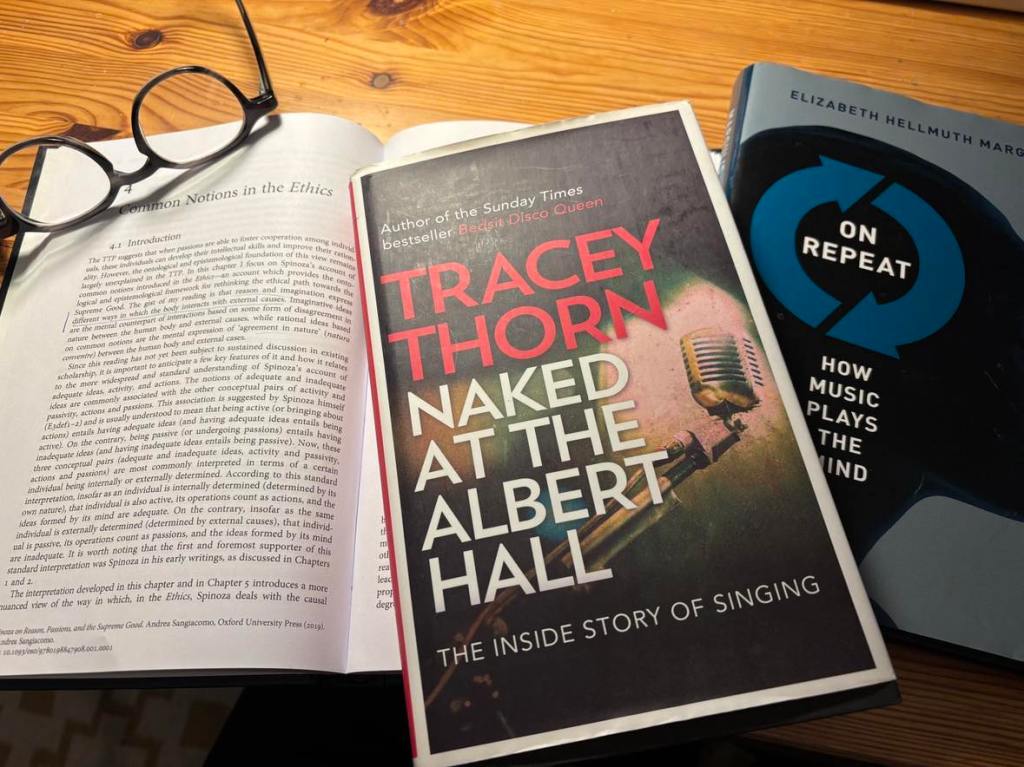
Being interested in the history of music in the 20th century in particular, I swallowed Tracey Thorn’s Bedsit Disco Queen where she describes the music scene of her early years before Everything But The Girl was formed in Hull, England. This as well as her more recent Another Planet can certainly count as autosociobiographies. While Thorn is a great singer and writer, I was equally taken by her reflections on singing in her essay collection Naked at the Albert Hall. Reading her account of singing inspired me to reconsider Spinoza’s philosophy of mind and particularly his account of philosophical therapy (I just finished a paper draft involving Thorn and Spinoza).  I think that Thorn, while describing her way into singing, is really expressing a kind of reflection that Spinoza would deem an approach to philosophical therapy in the sense of re-ordering ideas about what matters. Let me just quote from her first essay in Naked at the Albert Hall:

“When did you know you could sing? people ask me. How did you even start? Where does your voice come from, is it from inside your head or inside your body? … I’ve written before that it was a disappointment to me when I realised I wouldn’t be Patti Smith, but that was a little way off in the future when I first heard her in 1979. … My first reaction to Patti Smith was one of possibility. I wanted to be her because a) on the cover of the record she looked like a boy, and I felt that I pretty much looked like a boy, and she made looking like a boy a beautiful thing; and b) the first time I tried to sing along with those opening lines on Horses, I realised in fact that I could sound like her. … Low, dark boyish, it existed in a space that seemed familiar, and contained the echoes of the sound I was tentatively exploring in the privacy of my bedroom. Joining in with her I found that we did indeed occupy the same ground, and without knowing how or why I had an immediate sense of my voice ‘fitting’. Imagining this to be a conceptual ‘fit’, I of course believed that I sounded a bit like Patti Smith because we were alike, it was a metaphysical connection being made. And in doing so I fell into the first and most basic misconception about vocal influence – the idea that it transcends the physical. Now I believe that the reason she implanted herself into my imagination as my first vocal influence was the simple accident of vocal range … My perfect, ideal range. Still the place I most like to sing. … Almost the entire Horses album is pitched perfectly for me … Joining in with Patti on these songs was a joyous experience, utterly secret … The basic physical coincidence of our vocal ranges connected us not just ideologically, but physiologically. … The lungs propel air, which passes through the vocal chords, making them vibrate and producing the sound we use for either speaking or singing. But unlike any other instrument, these components are your own actual body parts, and the sound you make is both defined and limited by your anatomy. As an instrumentalist you might practice and adapt your technique in order to follow the style and sound of players you like … But as a singer there is only so much you can ever do to adapt the sound of your voice to emulate singers. We label as inspirational those whose sound lives somewhere close to our own …” (Thorn 2015, 3-6)

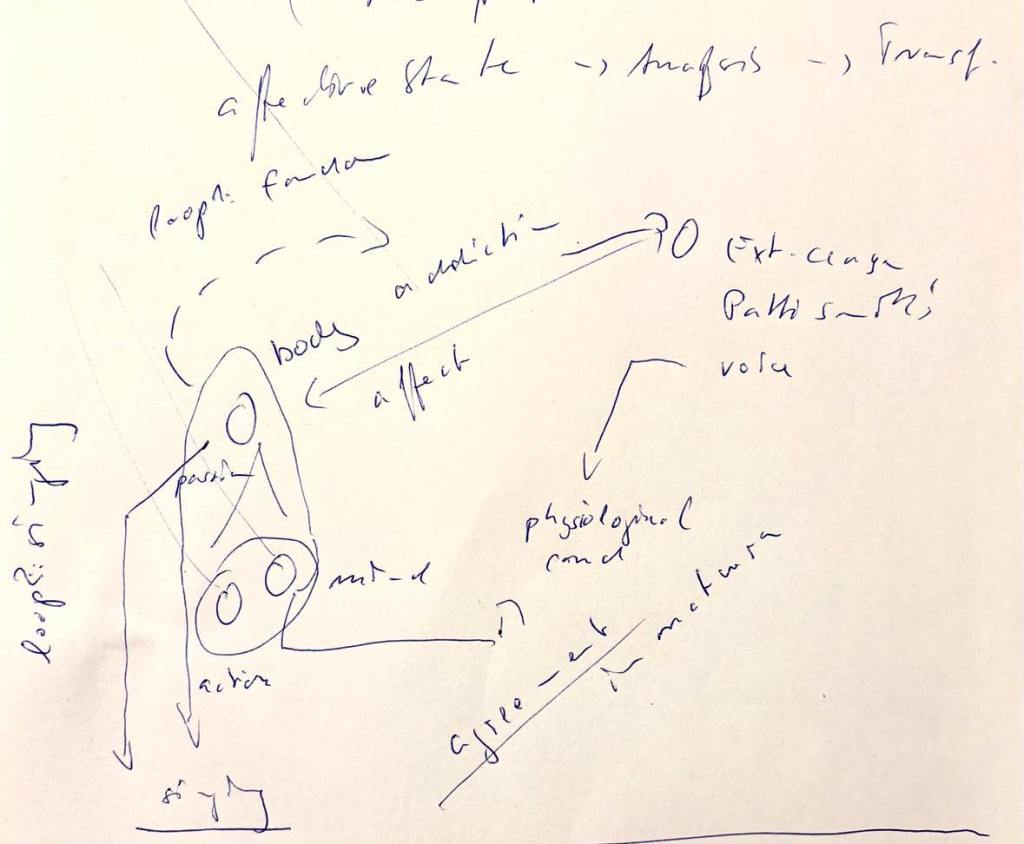
There is a lot in these observations. A couple of years ago, I took her observations as an anchor to think about active forms of listening to music. But now I think this goes deeper and exemplifies how we re-evaluate experiences and thus change (narratives about) ourselves. Apart from the aspiration and attraction depicted, it is clear that the author, Thorn, takes her body to be in agreement with that of Patti Smith, at least as far as the conditions for singing are concerned, and that that agreement is physiological. At the same time, the author realises that this agreement is easily confused with one of personality. But what she is describing is a common concept of her physiologically determined vocal range in agreement with that of Patti Smith. In Spinoza’s terms, Thorn, getting this more distinct concept of her physiological likenesses with Patti Smith, is revealing an agreement in nature. Arguably, while the initial exposure to Smith’s voice in 1979 is a confused attraction, the account Thorn gives in 2015 is a therapeutic disentanglement of the initially confused concept, distinguishing the external or distal cause, Smith’s voice, from the internal or proximate cause, her own voice, and the resonance between them, i.e. the agreement.

(An early attempt at scribbling down Tracey Thorn’s account as it relates to Spinoza’s Ethics)

____

* Dirk Koppelberg kindly corrected me on FB and offered the following charactrisation: “As I read Annie Ernaux, she does not “also” present a sociological or political analysis of her life but delivers an aesthetically arranged and composed description of it that illuminates certain sociological and political determinants of her life. This kind of writing seems to me an aesthetically challenging alternative to a sociological and political analysis in the strict sense.”

** The autosociobiographical approach will also figure in a project on reading as a social practice that I’m currently planning together with Irmtraud Hnilica. Stay tuned for updates on this project soonish.

A rough but workable guide to plan an essay

I keep noticing that one of the greatest worries of students is finding a workable research question for their essays – one that allows them to structure their work and keeps them in line with what they intend to promise. I’ve written on this before at length on this blog (here, a Groningen student reviews three of my posts), but I think I managed to break down the issue even more. – I’ve just finished an exciting three-day seminar on “Spinoza’s Ethics. An introduction to doing philosophy systematically for beginners.” The idea was to bring out the systematicity of the Ethics to such a degree that students could continue working with the text independently without loosing grip of the general framework. On the last day, I wanted to turn the tables and have my roughly fourty students work, not primarily through the text, but through potential essays on this book. Hence, I divided them into six groups and gave them pertinent tasks. In a feedback round, most students and I agreed that this was a surprising success. Therefore, I simply want to share the set-up of the tasks:

At the beginning, I asked the students to:

  • find some friction (in the text),
  • provide concrete evidence for this friction by providing at least two passages or sentences from the text,
  • provide a motivation of why the friction arises,
  • provide at least one possible answer as to how to state the friction and how to amend it.

By asking for a friction, I could rule out explorative works that have no natural boundaries and can keep students on the preparatory reading path forwever. By asking for concrete passages of text, students will have a constant fall-back place when themes would have them meander into the wilderness of the space of reasons. By asking for friction in the text, I also wanted to make sure that the friction arises from an immanent reading, rather than from an external criticism (e.g. of the sort: I don’t like this kind of philosophy, so here is why I prefer something else – which doesn’t really engage with the material). This approach mostly yields ambiguous uses / understandings of particular terms. Not everyone is interested in that kind of focus, but the promise is that this provides a workable way in and out, while one still has time to draw in all the pertinent aspects related to working through the friction.

Eventually, the student groups came up with six workable research questions. The evidence and motivations made for a pertinent structure, the possible answer for a fairly clear hypothesis. In the discussion of these approaches, we then tried to establish what the chapters / sections should look like: i.e. how they should implement the friction, motivation, and the answers. (In fact, this idea for planning essays is derived from my account of questions.)

Especially for beginners, it’s also important to counter the feeling that they don’t yet know enough to come up with a proper question. I addressed this worry by making clear that any philosophical thesis can (and indeed will be) countered at some point. So one shouldn’t waste their time by trying to immunise their work against criticism. Whatever you’ll say can be criticised. So you might as well get started immediately.

Of course, this is not waterproof. But my sense was that students now had an idea about how to move from reading to planning their writing – and that’s all I want.

***

Many thanks again to my great students in this course!

Paraphrases as validations. Or how using your own words (tacitly) carries interpretations  

A: Marriage is a speech act.

B: Why do you devalue traditional rituals?

A: I don’t! I just made a point about the constitutive role of language for marriage.

B: Oh, but why did you say that marriage was nothing but talk?

It’s common to paraphrase texts, whether written or uttered, with our own words. In fact, students are often encouraged to “use their own words” when asked to restate or summarise an argument. Such instructions are usually intended to allow for checking whether something has been understood correctly or for translating technical terms into common language. The misunderstanding in the example above can serve as an illustration: While A made a point about the act or marrying requiring the people getting married to actually say “yes”, B took A to mean that marriage reduces to talk and is thus devoid of any further value. So B took A’s utterance in a reductive sense, while A meant it in a constitutive sense. These different senses are brought out in the paraphrases. B specifies to have taken the initial sentence in the sense of “nothing but”; A clarifies to have meant “the constitutive role”. Paraphrases are ubiquitous and yet very difficult to master, at least in philosophical contexts. Attempting to outline a simple doctrine often forces me to re-write for hours on end. But what precisely is it that makes paraphrasing so difficult? As the little example shows different paraphrases can already come with different interpretations, which in turn entail different evaluations.

In what follows, I hope to gesture at an answer that shows how paraphrases (tacitly) depend on interpretations and thus also determine evaluations of the paraphrased positions. What’s more: I hope to give a reason for dispelling the common myth that you can present a position without already being committed to an evaluation. I’ll close with some thoughts about how paraphrases also validate the paraphrased thoughts.

Problems with paraphrases in philosophy

While exercises of paraphrasing might be “basic tasks”, they are generally highly contentious and often even lie at the core of academic disputes. On the one hand, paraphrases can be historically problematic in that they introduce ideas unheard of at the time of the original expression; on the other hand, paraphrases can be systematically problematic in that they introduce unwanted (metaphysical) commitments. Historically speaking, the early modern use of the term “man” commonly has a wider scope (including women) than the twentieth-century use that renders it identical to the expression “male human (being)”. At the same time, this etymology is complicated by the fact that the pre-twentieth-century use of “man” is often tacitly referring to human males as the standard. Thus, depending on the context, the paraphrase of “man” with the term “human being” might count as anachronistic, although it is etymologically apt. Metaphysically speaking, we might wonder whether the expression “the present King of France” commits us to non-existent objects. Whichever side you take on such matters, a crucial function of the paraphrase lies in directing the attention or focus of the interlocutor. Thus, it clearly affects the philosophical approach to a given thought or content and also the direction a conversation about it might take. Hence, the worry arises whether different paraphases tacitly commit interlocutors to contrary interpretations. Arguably, such worries are rooted in a holistic understanding of sentence meaning. Assuming that the meaning of a given sentence is not atomistcally determined, but by a set of other sentences that the given sentence is related to, I will worry whether get the implications right. Going back to the initial example, speakers A and B construe the meaning of the initial sentence via different sets of related sentences or implications.

This kind of problem becomes clearly palpable in teaching contexts. A helpful example is Anselm of Canterbury’s Proslogion. Confronted with the phrase “something than which a greater cannot be thought” (aliquid quo nihil maius cogitari possit), many students begin by asking whether that renders God’s greatness subjective. Given the phrasing in Anselm, this question reveals a certain kind of modern understanding of the term “thinking”. Reading “… cannot be thought”, they render “thought” as an activity that they (or even an ideal thinker) can perform and thus as the individual mental act of a subject. This reading drastically changes when students are exposed to an understanding of “than which a greater cannot be thought” as “greatest possible”, such that it can be seen as a metaphysical modality rather than a subjective act. Again, it’s paraphrases, both tacit and explicit ones, that bring out different commitments. Thus, the seemingly simple task of “saying the same thing in your own words” requires a careful interpretation of the phrase that is to be paraphrased. As I see it, then, giving a paraphrase depends on a specific interpretation of the initial phrase. Where does this leave us?  

The interpretation-ladenness of paraphrases

If our paraphrases are guided by specific interpretations, then this means that there is no such thing as a neutral report or presentation of a position. If I present Anselm’s formula in my own words and mistakenly say, for instance, “God is the greatest being, according to Anselm” (as opposed to “God is the greatest possible being”), then I’ll be mistakenly implying that God is the actually greatest thing (and something greater could be thought). However, most problematic paraphrases are not owing to such obvious blunders. Rather, they can depend on quite nuanced understandings. Now, my point is not that there are problematic interpretations; my point is rather that the paraphrase we choose commits us to a limited set of possible interpretations (as opposed to a different set of possible interpretations owing to a different paraphrase) and that there are no paraphrases that come without implications (and thus specific interpretations contrary to others). If this is correct, then there is no innocent or neutral paraphrase of a given expression. This, in turn, allows us to rid ourselves of a persistent myth: the myth that one could paraphrase a position and only then decide what to make of it. This myth often translates into a common thesis or essay structure, suggesting that you can structure your work by first presenting a position neutrally and only then evaluating it. This is impossible because the paraphrase already commits you to a specific interpretation – whether you know it or not.

The validating nature of paraphrases

But why, you might ask, is this so? Why can’t I simply paraphrase a position neutrally, leaving it open for various possible commitments? I have to admit that I have attempted this for a long time. But it doesn’t seem to work. The reason is that paraphrasing is a strangely bi-directional activity. On the one hand, a paraphrase is a bit like an (indirect) quotation, trying to convey what someone (else) has said. (Of course, we also continuously paraphrase our own expressions.) On the other hand, a paraphrase is like an appropriation, trying to convey what you have understood. These two aspirations can come apart, of course, both in historical and current readings. But what is even more important is that the appropriation often carries with it a sort of validation. In trying to appropriate someone’s form of words, I validate what has been said – by embedding it into my own thoughts. In fact, we often present and paraphrase claims that we take to be commonly accepted without specific references to any particular author. People now constantly say that mariage is a speech act, without particular reference to Austin or a theory of performative utterances. This thought has become part of a fairly common way of thinking about the role of language. Its ubiquitous paraphrases have made it part of the public domain, as it were. This way the initial thought gets validated in various formulations.

To see this, it’s vital to realise just how ubiquitous paraphrases are. In fact, most of the things we say are paraphrases of others’ words. In fact, we learn to speak and practise our daily interactions by constantly saying, in slight variations and paraphrases, what we hear and read others say. And since it often doesn’t matter who precisely said what, the exact authorship of the paraphrased sentences fades – until we fully embrace the thoughts ourselves and think we are original.   

So paraphrasing is a continuous and indeed necessary activity we practise in our daily lives, often used to validate thoughts in new contexts. This feature of validation, I submit, carries over when we, as philosophers, present the position of someone else. To what precise extent remains to be seen. But it’s clear that the concomitant validation plays a crucial role in the way we learn and pick up thoughts both in daily interactions and as philosophers who appropriate thoughts of others into our understanding of the world and the claims of current or past interlocutors.

An afterthought:

If this is remotely correct, using ChatGPT or other tools for paraphrases (instead of learning and constantly practising the validation of thoughts ourselves) might have highly problematic consequences for our (linguistic) interactions with others and indeed ourselves.

How to read (part thirteen): Imagining the author’s desk

I suppose I’ll never quite forget how clueless I was when reading Wittgenstein’s Tractatus for the first times. Why, to name one confusion of many, did he not bother to provide more motivation for the very first sentence: “The world is everything that is the case”? Was there some common or perhaps divine intuition that I just failed to have? For me at least, things changed drastically when I read somewhere that Wittgenstein was greatly inspired by gestalt psychology. According to the approach he might have had in mind, then, we start grasping stuff from a holistic totality and analyse our way into details rather than from atoms from which we piece together an initially fragmented world. I’m not saying this is the whole story. But for me it provided a possible motivation that helped me understand a sentence that seemed to have been written without justification. Crucial context had been provided by something that seemed utterly absent from the text itself. However, once I took gestalt psychology into account, many things began to add up. By contrast, when texts are sufficiently current or explicit about their inspirations, their motivations seem fairly obvious. So much so that you can predict an author’s response to a given question as soon as you know some of their basic claims. Given demands of consistency, you sort of know what Ruth Milllikan would respond to the question of “whether ChatGPT can think”, even if she has not done so explicitly (just for the record, I’d say she’d point to her considerations of Swampman). But when texts are sufficiently remote in time or cultural conventions, it’s vital to take into account their sources of inspiration. In fact, I think scholarly forms of reading largely consist in re-establishing contexts of this sort. In what follows, I want to motivate this approach to reading and provide some further distinctions along the way.   

Imagining the author’s desk. – One of the first things you learn as a student of medieval philosophy is that you have to start by reading much of the Aristotelian corpus. Even if you don’t follow this advice, you’ll soon find that Aristotle is all over the place. Explicit and indeed implicit references to his works are woven into the fabric of most medieval philosophical texts. When you look at critical editions of medieval works, you’ll learn another important thing: Many medieval texts are full of often unacknowledged quotations from other authors. When you read William of Ockham, you’re often faced with a jumble of chunks from Henry of Ghent, Duns Scotus, and others. This reading experience changed my attitude to texts generally: When I read a text, I (also) want to know which books were lying on the author’s desk when writing the text. The reason for searching such sources is not just a curiosity about the author’s inspirations or the phenomenon of intertextuality; often the material that inspired the author helps you understand the text at hand. Ockham, for instance, will presuppose that his readers also read Boethius or Aquinas. So he wouldn’t bother explaining an issue when a brief reference to a theory of an earlier author would do. While Ockham’s own brief reference can leave you clueless as a modern reader, looking at his sources might provide just what you need to understand where he is coming from. This means that you can figure out what Ockham was trying get at when looking at earlier stuff. Accordingly, the more material on Ockham’s desk you can identify the better you’ll understand his frames of reference and – perhaps – ways of thinking.     

Leaning from Jenny Ashworth. – For students of philosophy, (early) modern philosophy is often introduced as an era in which philosophers shook off the reverence and references to prior authorities. Accordingly, these texts (seem to) encourage a mode of reading as if they were written straightforwardly “for you”, i.e. without the need to recur to earlier, especially scholastic, sources. As I see it, such authors were basically just better at hiding their sources. Jennifer Ashworth’s work on post-medieval scholasticism, even in figures such as John Locke, debunk this myth of textual autonomy, pushing the contextualisation to an instructive extreme. While Locke seems to pretend, even at the time of writing his Essay, that he is completely out of touch with Aristotelian and scholastic sources, Ashworth and others have shown clearly that he was very much inspired or at least wrestling with this material (here is one of Ashworth’s papers on this issue). What helps, then, in understanding such authors is the diligent study of contemporary and earlier texts and trying to get a picture of the books in their libraries.

What to look for. – Studying an author’s sources or gathering them from scrupulous critical editions is a good starting point for getting at the ‘material basis’. But you’re not doing a plagiarism check. (Of course, you might do, and conclude that all authors were less original than you thought, but that would merely betray a lack of understanding intertextuality.) So in what way can you exploit such sources? As I see it, imagining the author’s desk can get from very concrete kinds of inspiration, i.e. the very words someone actually quotes, to fairly abstract modes of thinking: so you’re looking for quoted words, imitated styles, related kinds of arguments, common principles, terminology, leading concepts or models. One thing that made me apply this strategy of reading more explicitly as a proper method was the realisation that I use unacknowledged forms of inspiration much of the time myself. When I wrote my PhD dissertation on Ockham’s philosophy of mental language, for instance, I was greatly inspired by my studies of linguistics, especially text linguistics. Even though hardly any of that made it into my text, certain ways of linguistic reasoning continuously served as a backdrop for my reading and writing. So if I write like this myself, it’s not entirely outlandish to assume that other people were and are inspired in similar ways.

Figuring out how an author ‘thinks’. – Eventuallly, this approach to reading might get you into very elusive interpretive territory. Going from what other texts might have inspired an author’s writing, you might get a feel for more abstract kinds of inspiration. Does John Locke think like a mechanist or does his medical background have a bearing on his thought, such that he might be said to think like a biologist avant la lettre? While this kind of issue is very elusive indeed and very hard to argue for, you might try and find some evidence in the way an author construes or exploits examples, thought experiments or analogies. While elusive, certain styles of reasoning preclude certain forms of consideration and might provide insights into what enables discoveries or inventions (or what might have blocked them).

In other words, trying to make ‘the context’ of a text concrete by imagining sources of inspiration re-establishes the conceptual space in which you can see an author moving within the boundaries that provide both consistency and limitations.   

______

* Here is part one of the series on reading.

How to read (part eleven): With texts against interpretations

A telling fact about human intelligence is that we can hold a lot of false beliefs and still survive or even live a jolly good life. For all I know, there are flat-earthers around whose beliefs don’t seem to interfere much with other beliefs. It’s telling because it raises the question of how much really depends on our knowing the truth (imagine the word capitalised). Much less spectacular but vital for philosophers and historians of philosophy, the same might be true for our understanding of texts.* Many of us might live with grand misinterpretations without ever noticing. (I, for one, lived with a mistaken understanding of what the term “proposition” means roughly until I wrote a paper about it. ) This fact triggers at least two responses: (1) A fair amount of people think that this sad state of affairs can be amended by proper reading which will eventually lead to a proper understanding. “I just read carefully and see what it says”, or something like that. (2) To this a more sceptically inclined colleague might respond: “Well yeah, but it’s all down to your interpretation.” These fairly common yet opposed responses give rise to two opposed myths about reading: The first is that the text simply contains what we can say about it. This kind of hermeneutical givenism is often met with what one might call interpretationism, that is, the idea that there is no text an sich but only interpretations. This opposition is frustrating because it polarises approaches that actually depend on one another. As I see it, the relation between them is not one of contrariety but of a dialectical swinging back and forth. Even if there is not one single correct understanding of a text, there are many false ones. If this is correct, we should exploit this fact for (becoming aware of) our practice of reading by looking for frictions between what we think we know and what the text presents us with. In what follows, I would like to share some ideas how to exploit such frictions. The crucial point is that a claim on what a given text is about should be refined in the course of confronting the actual text. You may start with the assumption that a text is about X. If you’ve done some proper work, you should find that the text is about Y. Here is how:

What are philosophical texts about? – Contrary to a widespread assumption, the answer to that question is normally not given in the text itself. Philosophical texts typically consist of arguments for a certain claim. That’s at least what should be true of our currently most common genre, the philosophical paper or essay. Thus, a good way to read those is to begin by identifying the conclusion that is argued for and then to look for the premisses supporting to the conclusion. How do you find the conclusion, though? What’s often overlooked is that this question is twofold. It has a textual or grammatical sense and a topical or disciplinary sense. In the textual sense, papers or passages often contain a line saying “the aim is to show”, an explicit statement with the defended view or a “therefore” (or “thus” or a similar word or phrase) introducing a conclusion. You should by all means look for such items when reading, but I suppose that the assumption of what a given text or passage is about is settled well in advance by what I call topical sense. Usually, you don’t just bump into a text wondering what it’s about. That question is normally settled by a a course instructor, secondary literature or a bibliography listing this text under a course title or keyword. In this sense, the conclusion is generally embedded in a topical network of a topic (the nature of the mind) as related to a discipline (like philosophy of mind), a common problem (how do mind and body interact), and a set of positions (say, dualism vs monism) on that problem. So even if you look for the conclusion in the text, it will be the topic suggested by the instructor or some other context that guides your search for the conclusion. I bet that if you were to list Cinderella in a syllabus for a consciousness course, people would start looking for the pertinent points in the text. What this comes down to is, again, twofold: On the one hand, a philosophical text is about (arguing for) a conclusion; and identifying the conclusion settles what you take the premisses to be. However, on the other hand, the conclusion is commonly assumed in advance, since the text is given to you in a topical context that suggests and constrains potential conclusions. If this is correct, it seems that prior interpretations (taken on authority) often settle what a text is about. Try reading Descartes’ Meditations as a text that is not in some sense about dualism and you’ll see what I mean. It’s not impossible, but many people will think you’re avoiding the elephant in the room.

Points of contact. – Guiding topical assumptions might seem problematic, but they are not. They belong to the way we receive the text. Rival interpretations often argue about the right topical context. They can be quite controversial and seem mutually exclusive. Just think of the Bible as a religious text as opposed to a historical document. Sometimes they seem more complementary. You can see the Bible as both a historical document and a religious foundation. The point is, then, not to avoid such contexts (and go for givenism), but to see what actually connects text and interpretations. In other words, you should look for points of contact. What are the interpretations arguing about and how do they relate to the text. Interpretations worth your time do not only argue about the proper topical context but do so by also pointing out a concrete term or passage in the text. This is the proper point of contact. Interpretations and related disagreement must have a clear textual basis.

Where are you now and what is next? – If you have found one or several points of contact, you can begin to see what the text is about – in keeping with various interpretations. Don’t downplay this! Figuring out a point of contact is an achievement going well beyond engaging with doxography or an individual interpretation. You could now write something about the state of the art. But note that, so far, you have not begun to work with the text as such. But how do you begin that and why should you bother? Many people won’t even delve into different interpretations but stick to a doxography telling them authoritatively what certain texts are about. Although doxographies initially derive from engagements with the text, they don’t make these engagments explicit. No one today will actually argue that Locke was an empiricist. Such interpretations are taken for granted, not in the sense that they are taken to be true, but in that they are taken to belong to an interpretive tradition. (In the same way, we wouldn’t call a map of Paris from 1250 or from 1950 false; although it still tells us something, we know that it’s outdated.) If you want to move on, you should know what you want. Do you actually want to read the text or do you want to pass an exam? Are you interested in a certain kind of philosophy or do you want to see how it was or is done, that is, written? As I like to put it, if you’re merely doing philosophy, it’s enough to get the hang of some interpretations. If you want to do history of philosophy, you have to engage with the text. But how?

Build up friction between the text and the interpretations. – Topical contextualisations or doxographies are often taken as a starting point, but they do obscure (earlier) failures of understanding. Students often don’t notice that they have mainly learned to project an interpretation into a text, rather than reading a text. So how do you move ahead? Start from your point of contact, but rather than taking an interpretation for granted, ask yourself what the term or passage in question is about. Begin by trying to explain the passage in virtue of the other parts of the same text. How? Explanations like “Locke is an empiricist” or “This passage contains Locke’s account of linguistic meaning”, for example, will commonly block actual reading. You’ll notice this when you ask for details in the text. Once people parse Locke’s famous claim that “Words in their primary and immediate Signification, stand for nothing, but the Ideas in the Mind of him that uses them …” with the assumption that Locke discusses meaning, they are likely to think that “signification” means “meaning”. Arguably, Locke’s text doesn’t offer any such account. So what do you do instead?

  • Provide an analysis of the content and style of the passage as such: explain (technical) terms, see how they hang together and get taken up. Look at logical operators and connections between sentences. See whether it contains arguments or explications of terms. See whether it contains examples. References to other authors or texts. See whether it contains metaphorical expressions. Ask yourself what work the metaphors do.
  • Make a strict distinction between the content and the function of a passage in the overall text. Does it function as an introduction or is it a refinement of something earlier? Is it a key passage in the text itself or part of a larger argument?
  • See whether the technical terms used are part of a common terminology. Study the terminology through dictionaries, handbooks or related texts.
  • Check the translation (if it is one) for consistency with regard to technical terms. Is it a use of terms that’s still common or now part of a different discipline?

Going through some of these considerations will quickly challenge the interpretive ideas. You will likely notice that a text, once you look at the whole, can be part of quite different topics or disciplines and also that the priorities provided in the text rarely match what is deemed relevant in current interpretations. As Jenny Ahworth has shown with regard to Locke’s notion of signification, sometimes a different understanding of one technical term can turn over whole traditions of reading a text. But even if you don’t intend to contribute original research, you’ll have made a first step to developing a solid and independent understanding.

____

* Here is part one of my series on how to read.

Reviving the commentary as a philosophical genre

When I was in my final school years and reading lots of Goethe, my German teacher recommended I read some commentaries by Erich Trunz. This was an amazing discovery: Trunz explained the texts on various levels and, above all, he left out none of the difficult passages that seemed impossible to grasp. When I began reading philosophy at Bochum university I found like-mined approaches, especially in medieval studies. But especially the so-called secondary literature on modern philosophy was often disappointing: True, the interpretations were often quite elegant, but they mostly bypassed the dark passages that clearly required a professional interpretation to make any sense whatsoever. The often fleeting remarks on Wittgenstein’s Tractatus and its numbering system, for instance, left me in despair. Was I not seeing the obvious or were the interpretations I consulted just not geared towards explaining the text? Only much later it dawned on me that the commentary was a philosophical genre in its own right and, outside more philologically inclined circles, a rather rare treat. These days, this is especially perplexing, given that the “diversification of the canon” requires reading unfamiliar material and thus a lot of detailed commentary. But apart from a couple of good examples (especially in classics and medieval studies), one can’t say that the commentary is exactly fashionable again. (See Barry Smith on the neglect of this genre.) Students are often entirely unfamiliar with the genre and sometimes seem to conflate it with what is known as an “opinion piece” in newspapers. After some sketchy remarks here and there, it is high time, then, to say more clearly why a revival of this genre is overdue.

So what is a commentary? – My rule of thump is that commentaries focus on explaining given texts, the linguistic forms of utterances themselves, rather than merely on ideas and arguments. Commentators do not solely attempt to say what a text is saying and what it means or has meant, but also why it is expressed in the way it is expessed. This means that the structure of the commentary follows the text and not the interpretive ideas or goals of the commentator. The beginning of a commentary is thus marked by a quotation of a word or passage from the text itself. Commentaries are often provided along with critical editions or translations of primary texts. They range from occasional annotations to “dark” passages or unfamiliar terminology to full-blown interpretations, giving background information on related texts or tracing unacknowledged sources. That said, a commentary can of course also be a part of a larger interpretation and typically occurs when a specific text passage or term forms the point of contact between different interpretations of a text. In fact, many introductions or guidebooks are commentaries in disguise. But besides critical editions of ancient and medieval texts, it’s mainly Wittgenstein’s work that seems to have invited the genre of commentary.

Why bother? – Do you know Beethoven’s 5th Symphony? Of course you do! Most people only know the opening theme, though. Secondary literature focussing on “central themes” is a bit like that. Arguably, you need a line-by-line commentary of Wittgenstein’s Tractatus to get beyond the famous Proposition 7 (see e.g. Duncan Richter’s commentary). The point is, then, that understanding a thought, argument or concept is different from understanding a text. But if philosophers care mainly about the former, why bother with the latter? Aren’t the essential ideas enough? Getting the “essentials” of the Tractatus, for instance, is like getting a Readers Digest or worse perhaps a cartoon version of it. Nothing wong with cartoons, you say. Of course not, but why bother with philosophical texts in the first place? But here is a more important point: It is often said that the text as such only really matters, if we consider it or the author an authority we want to defer to. Arguably, then, if we value independent thinking we can bypass the textual details. However, this gets things the wrong way round. For who tells you what “the main point” of a text is, if not an authority that you implicitly defer to? As I see it, then, the supposed “main points” are taken on mere authority and are in fact the outcome of earlier textual work of past generations. It is the detailed commentary that equips you with the material necessary for independent study and thought.

How to write a commentary? – Getting a glimpse of the scholarly work going into a commentary often makes the idea of writing such a thing overwhelming. But fear not, it’s doable. Especially these days with so many searchable resources at hand, you often don’t even need to travel. Here are a couple of preparatory moves, though, that might help you getting into the right frame of mind for beginning to write a commentary:

  • Pick and prepare a bit of text: Pick a text you like and find a bit tricky. Not too much: just a couple of lines. The text is your guide. So actually write it down. No, don’t copy it. Only if you actually write it, you will begin to see tricky bits. Write it down, number the sentences, underline words that you want to focus on, and highlight sections that you find tricky.
  • Think about the origin of the text: Make clear to yourself how the text made it onto your screen: Is it from an early print, a student or critical edition, a translation? Who edited it and when and why? Is the spelling in keeping with the original, is there something standardized? All these things tell you something about the material basis and politics involved in the text and might matter to what you actually find on the page.
  • Translation: If the text is in a foreign language, then try to translate it or write out a given translation beneath or beside it. If you don’t know the language, try to get at least keyterms. Check every keyterm and ask yourself whether you can think of a better alternative. Making a translation is the best way to see what you really don’t get. In my experience, many sentences begin to become unclear if you try translating or paraphrasing them.
  • Paraphrase: If the text is in your native or working language, try to make a paraphrase or transfer bits into formal language.
  • Variants: If you waver between different paraphrases, write down both or more. These are possible interpretations. If applicable: Have someone else make a paraphrase, too.

Now that you have a version of the text, you can begin with the actual commentary:

  • Start with a term you find central: Explain briefly why the term is central. Try saying how its centrality affects the rest of the passage you’ve picked. Say how the term relates to (modern or contemporary) cognates (similarities, differences). Say in what sense the term is part of a terminology.
  • Move on to a phrase you find difficult: Say what makes the phrase difficult for an imagined reader (even if it’s no longer dark for you): a certain grammatical feature, an unknown lexical meaning, unfamiliar terminology, strange wording etc. Now spell out some resources that help(ed you) figuring out what the phrase means: a grammar, dictionary, related texts that come with similar phrases.
  • Where does the idea expressed by the phrase come from? Hardly anything you find in a text is (entirely) original. This means that there is often something to be gained from asking genealogical questions: Where does this idea come from? Is it almost a quotation? Does the terminology perhaps just signal a slight shift of interest?

When writing your commentary, there are some obvious techniques to be used:

  • What if you can’t figure something out? Take the phrase and google it! Likely someone else has commented on it. Or something similar is in a different text that helps you figure it out.
  • Make connections within the text: Try to see whether the terms you commented on shed light on the dark phrases. Check logical connectives and see whether they are well used. Check for omissions, enthymemes, implicit assumptions etc. and write them down. Relate these notes to other parts of the same or a different text.
  • Think of audiences: Who will understand thee text better with your comments. Will it help students, people new to the material or fellow specialists? Try too gear your comments to one of those audiences. Ideally begin with students who had no exposure to the material.
  • Contextualise your priorities: Even if you try focussing on “the text as such”, your interests and what you find worth commenting on will be in keeping with certain interpretive traditions. Make them clear to yourself and use them for deciding how to move forward.

It goes without saying that there are many other factors that you could take into account, but if you follow at least some of these stepts, you’ll end up with a bit of commentary on a bit of text that might present you with a way forward or a spark for doing something else with it. Perhaps you’ll extend it, move on to another text or integrate it in an interpretation. I for one will begin to make the commentary a decisive part of writing exercises for students. My hope is that we might write more commentaries in the future. In the meantime, I’d love to hear your thoughts, suggestions or about your favourite commentaries.*

_______

* Thanks to Susanne Bobzien, Nicholas Denyer, Michael Kremer, and Michael Walschots for some first suggestions.