Postscript to yesterday‘s post: Usually, we tend to think of the alignment problem as the problem of AI, or getting AI to align with human intentions, values, and so on. But the real alignment problem is that humans tend to align with AI.
We have a number of indications of this. There is obviously a homogenisation in the tone of writing, in the structuring of arguments, and so on. Of course, this doesn’t come out of the blue. People tend to align with what they think is desirable or, depending on the in-group/out-group situation, undesirable. They tend to align with what they think or imagine to be linguistic, epistemic, moral, and other expectations. We can see this in the changing nature of the papers being written, in the way people conceal dialects and accents. We can also see it in changes of presentation styles following the introduction of PowerPoint, and so on.
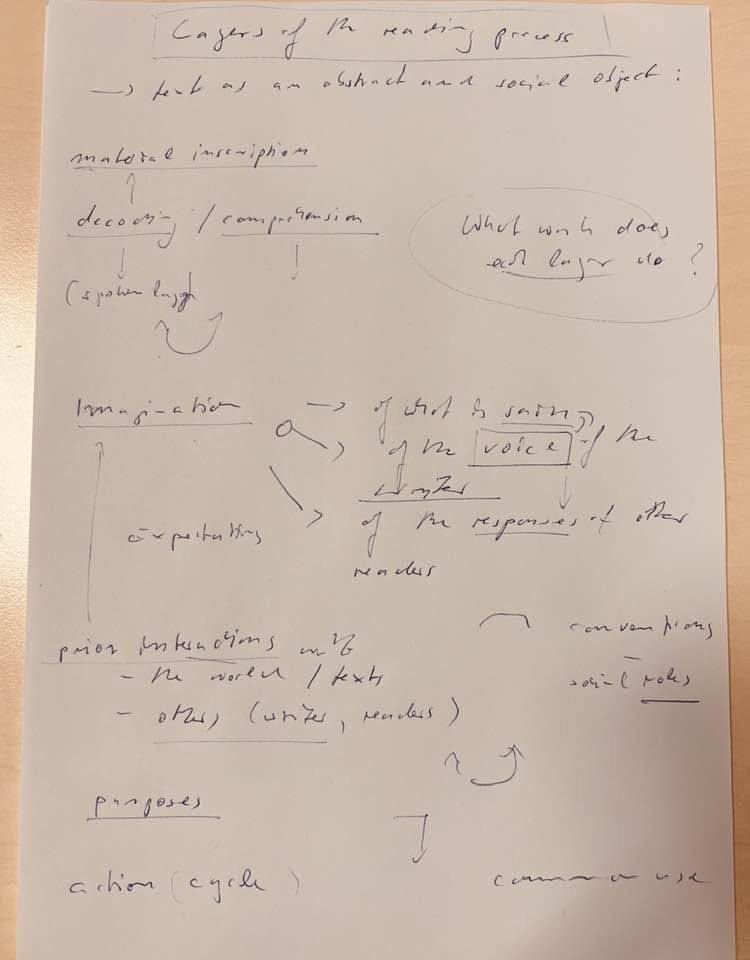
The issue that I think is worth looking at in more detail is how this affects knowledge production, especially the humanities, which rely very much on reading and writing processes, often now governed or refined by AI. If we see adverse effects we might also wonder whether this alignment can be reversed. Yesterday‘s post attempts to pin down some ways or – to use a fancier word – mechanisms through which this happens: through aligning with imagined expectations in reading and, of course, when reading and subsequently rewriting one’s own texts.
_______
Just for the fun of it, here is an early draft of the ideas leading up to yesterday’s post: